

Why the Right Breath Starts With You: Breathing Assessment Seattle
By David Reveles, Founder of Origins Unity
Most people discover breathwork in the same way: they find one technique, feel an immediate shift, and assume that practice must be good for them all the time. You need to create a breathwork routine surrounding your breathing assessment Seattle.
I understand the appeal. A single session of conscious breathing can change how you feel within minutes. But that speed is precisely why breathwork deserves more care, not less. The breath gives us unusual access to respiratory physiology, attention, emotional state and autonomic regulation. A tool with that much influence should not be prescribed blindly.
At Origins Unity, I teach what I call full-spectrum breathwork. Breathwork is not one practice. It is a range that extends from quiet functional breathing and restorative downregulation to stronger opening and activating methods. The spectrum gives us options, but options are useful only when we understand where a person needs to begin.
That is why the first step is not choosing a popular technique. It is understanding how you breathe today through a personalized breathing assessment and breathwork consultation. That’s why we offer the most comprehensive breathing assessment seattle so you have a holistic plan and include everything and know when to use what and why.
Full-spectrum breathwork is an assessment-led system that matches breathing practices to the person, purpose and moment. It examines more than whether someone is a chest breather or a belly breather. It considers breathing mechanics, nasal function, respiratory rhythm, carbon-dioxide tolerance, nervous-system response, recovery, movement, sleep, stress and real-world performance.
The goal is not to collect increasingly dramatic techniques. The goal is range: the ability to become alert when action is required, settle when recovery is needed, breathe efficiently during movement and return to a comfortable baseline afterward.
For a deeper introduction to the underlying physiology, read Understanding the Science Behind Breathwork and Breathing Exercises.
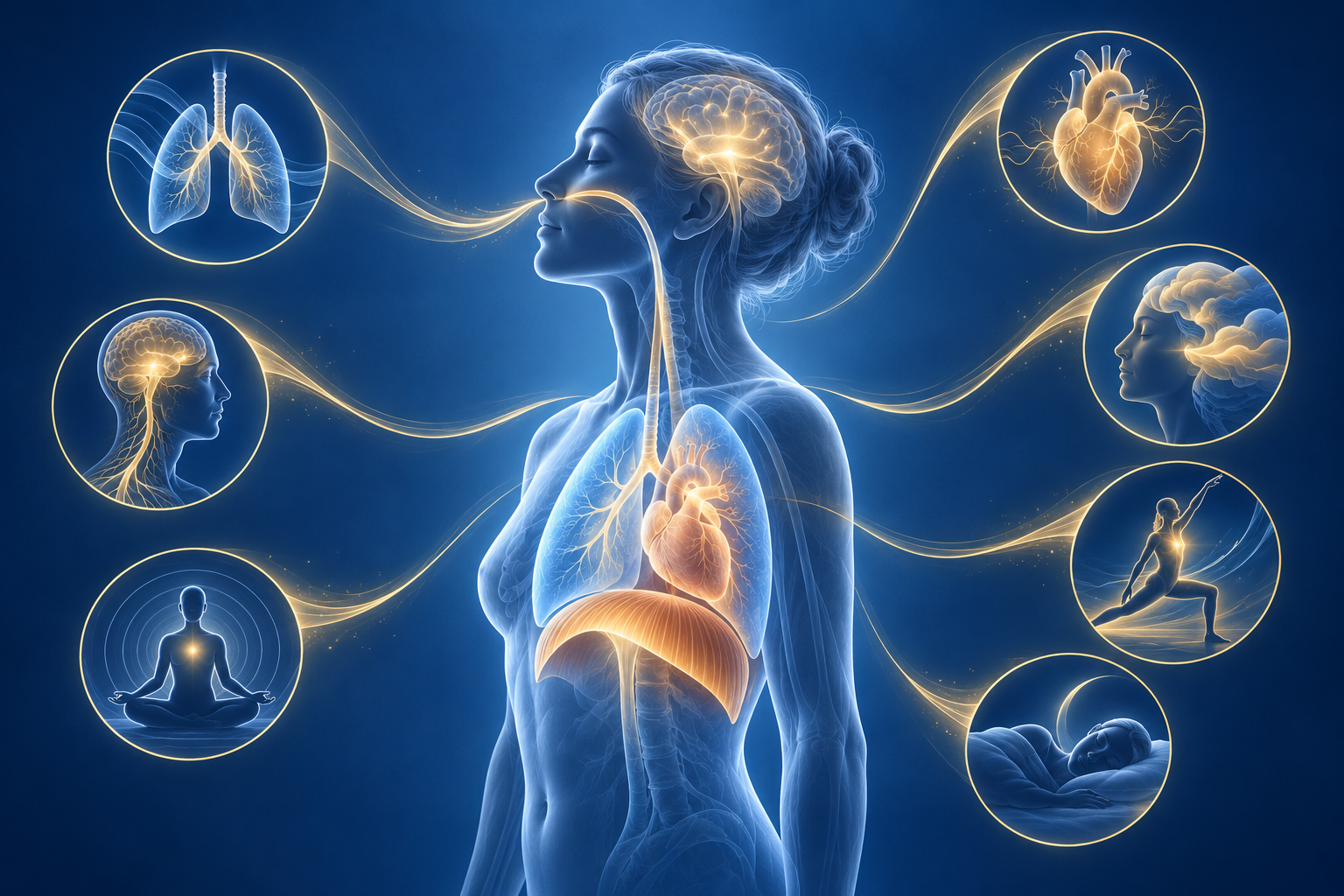
Breath training builds the foundation. It addresses how you breathe at rest, while speaking, during sleep, under physical load and throughout ordinary life. Depending on the person, it may include nasal breathing, diaphragm and ribcage coordination, comfortable breath volume, respiratory-muscle function, carbon-dioxide tolerance and recovery breathing.
Breathwork intentionally changes state. These practices alter the pace, depth or pattern of breathing for a specific purpose: calming down, sharpening attention, preparing for effort, supporting meditation or exploring a stronger physical and emotional experience.
Both belong in a complete practice, but they are not interchangeable. Layering intense breathwork onto inefficient baseline breathing can amplify symptoms rather than correct the foundation. Sustainable progress usually begins with function, then adds intensity only when the assessment and the person’s goals support it.
Origins Unity organizes practices along four practical levels. These categories are not diagnoses or rigid rules. They help us choose a dose that fits the person’s current state and intended outcome.
This is the downshift: quiet nasal breathing, comfortable slow breathing, an unforced longer exhale, resonance-style breathing and light humming. It is often the best place to begin when someone is stressed, underslept, recovering or easily overstimulated.
Reviews of slow breathing describe changes in heart-rate variability, blood-pressure oscillations and respiratory-autonomic interactions, although effects depend on protocol and population. See the physiological review of slow breathing, the systematic review and meta-analysis of slow breathing and HRV, and a newer review of slow breathing and HRV biofeedback. Practical examples are available in Origins Unity’s guide to breathing techniques for stress reduction.
Medium practices use a deliberate rhythm without seeking a highly intense response. Box breathing, cadence breathing and some forms of alternate-nostril breathing may support transitions, attention and emotional steadiness. A shorter structured practice may fit between meetings or after a difficult conversation, while breathwork combined with meditation may be better for a longer reset.
Explore a five-minute breathwork ritual or the relationship between breathwork and meditation.
Strong practices use faster, fuller or connected breathing, sometimes combined with carefully selected breath holds. They can create a more pronounced physiological or emotional experience. Intensity, however, is not evidence that a practice is more therapeutic. These methods require screening, clear boundaries, skilled facilitation and enough time to return to baseline.
Activating practices sit at the most stimulating end of the spectrum. Faster patterns, longer retentions and some breath-and-cold combinations can create a substantial sympathetic response. They may have a place in performance or stress-tolerance training, but they are tools rather than goals. They should not become the default simply because they feel powerful.
Two people can report the same problem, such as feeling anxious and exhausted, and need opposite practices. One may be breathing too much for their metabolic demand, using the mouth at rest and recruiting the upper chest and neck for every breath. Another may have solid mechanics but struggle to shift out of sustained arousal after work. A third may have nasal obstruction, snoring or exercise-related symptoms that deserve medical evaluation rather than coaching alone.
Guessing cannot reliably separate these patterns. Assessment can.
1 Breathing Pattern and Respiratory Mechanics
We observe where movement occurs. Does the lower ribcage expand laterally and posteriorly? Does the abdomen move naturally? Does the upper chest dominate? Are the shoulders, neck and accessory muscles working harder than necessary? Screens such as a Hi-Lo observation can provide coaching information about how the body organizes each breath.
2 Ribcage Expansion and Mobility
The ribcage is designed to move in multiple directions. Thoracic excursion and the quality of expansion and recoil can reveal restrictions worth exploring through positioning, mobility and breathing practice. A single measurement does not diagnose disease, but it can guide training and provide a repeatable baseline.
3 Nasal Breathing and Airway Screening
The assessment considers perceived nasal openness, left-to-right differences, congestion, resting mouth posture and whether a simple external nasal-valve maneuver changes airflow. The nose warms, humidifies and filters air, and the paranasal sinuses contribute nitric oxide to the airway. For further reading, see research on nasal nitric-oxide physiology, nitric oxide and the paranasal sinuses, and the observed effect of humming on nasal nitric oxide. Persistent obstruction, marked asymmetry, snoring or suspected sleep-disordered breathing warrants appropriate clinical evaluation.
4 BOLT and Comfortable Breath Hold Testing
A comfortable post-exhalation breath hold can provide coaching information about breathlessness perception and sensitivity to accumulating carbon dioxide. The Oxygen Advantage system calls this the Body Oxygen Level Test, or BOLT. Origins Unity uses it as one part of a broader assessment. It is not a direct measurement of blood oxygen, lung capacity, VO2 max or disease. Learn more from the Oxygen Advantage method and BOLT resources.
5 Carbon Dioxide Tolerance
Carbon dioxide is not merely waste gas. It participates in acid-base regulation, respiratory drive, blood-flow regulation and oxygen release from hemoglobin. Breathing more air than the body requires can lower arterial carbon dioxide. Comfortable breath-hold testing and symptom observation can provide practical context; capnography, when appropriately used, adds direct information about end-tidal carbon dioxide and the respiratory waveform.
6 Heart Rate Variability and Autonomic Regulation
Breathing and heart rhythm interact through respiratory sinus arrhythmia: heart rate commonly rises during inhalation and falls during exhalation. HRV biofeedback can help explore how breathing cadence affects this relationship. The goal is not to chase the highest possible number, but to understand patterns, adaptability and recovery over time. For daily application, see How to Regulate Your Nervous System Naturally.
7 Resting Respiratory Rate
Respiratory rate is simple but contextual. Stress, sleep, illness, medication, fitness and metabolic demand can all influence it. We interpret rate alongside breathing volume, mechanics, symptoms and other findings rather than labeling a single number as dysfunctional.
8 Peak Expiratory Flow and Respiratory Capacity
Peak flow measures how rapidly someone can forcefully exhale. It has established clinical uses for people with asthma when incorporated into a healthcare plan, but it is not interchangeable with spirometry. When clinically indicated, measurements such as FVC and FEV1 should be obtained and interpreted by qualified healthcare professionals.
9 Breathing During Movement and Exercise
Resting breathing is only part of the picture. We observe what happens while walking, lifting or performing sport-specific work. Does breathing remain coordinated as demand increases? Is there unnecessary breath holding? Does respiratory effort escalate disproportionately? A published systematic respiratory assessment of athletes illustrates why multiple respiratory factors may need to be considered together.
10 Lifestyle and Real World Context
No breathing score exists in isolation. We examine work stress, sleep quality, training load, recovery, posture, anxiety history, medications, health conditions and the situations in which symptoms appear. The assessment connects measurements to the person’s actual life.
A recent client illustrates the value of assessment. He is a financial professional in his late twenties with high cognitive demands, long workdays, strong baseline fitness and goals centered on longevity and sustainable performance. His comfortable breath-hold measures and carbon-dioxide tolerance were already comparatively strong, and his nervous system appeared responsive rather than chronically overwhelmed.
On paper, he might look like an obvious candidate for advanced activating breathwork. His mechanics told a different story.
Ribcage excursion was limited. He described an urge to inhale before completing a relaxed exhale. His upper chest and neck contributed more than necessary, and one side of his nose appeared structurally restricted. No aggressive technique could correct a structural airway issue, and more intensity would not automatically improve the mechanical limitations.
His program therefore emphasized ribcage mobility, passive exhale quality, gentle post-exhalation pauses and reduced accessory-muscle effort. Strong practices were limited and used only when appropriate. The objective was precision: improve the foundation before adding stimulation.
This anonymized coaching example is not proof that the same plan fits everyone. It demonstrates why the assessment can reverse the intuitive recommendation. A person with strong capacity may still need better mechanics and integration rather than harder breathing.

A professional workday repeatedly asks the nervous system to change states: wake up after imperfect sleep, commute, concentrate, speak, solve problems, manage conflict, train, connect with family and eventually settle for bed. Each transition creates a different breathing demand.
The goal is not to spend hours practicing. It is to use the right dose at the right transition. A minute of comfortable breathing before a meeting has one purpose. Recovery breathing after a difficult conversation has another. Breathing during a run and preparation for sleep require different strategies again.
Origins Unity offers additional guidance on breathwork for workplace stress and focus, corporate breathwork programs and broader corporate wellness programs in Seattle.
Breathing training can also be integrated with strength, mobility, nutrition, sleep and nervous-system practices. Within the Fatigue to Fit program, breathing is not treated as an isolated hack; it becomes one part of a whole-person system for energy, recovery and sustainable fitness.
For people who benefit from more time, nature and guided integration, Integrated Living Retreats combine breathwork with meditation, mindful movement, emotional processing and community. You can also review upcoming breathwork events in Seattle for shorter group experiences.
Gentle, comfortable breathing is generally accessible, but strong or activating practices require more caution. Rapid or excessive breathing can lower carbon dioxide and contribute to dizziness, tingling, lightheadedness, cramping, palpitations or panic-like sensations. Cleveland Clinic’s overview of respiratory alkalosis and hyperventilation explains the underlying clinical condition, while its beginner guide to breathwork provides a general introduction to common techniques.
Never practice breath holds or intensive breathwork in water, while driving, standing near a fall hazard or anywhere that losing awareness could cause injury. People who are pregnant or have cardiovascular, respiratory, neurological, psychiatric or other significant medical concerns should consult an appropriate healthcare professional before using intensive breathwork. Stop if a practice produces distressing symptoms.
Breath coaching does not diagnose or treat structural airway problems, asthma, sleep apnea, cardiovascular disease or mental-health conditions. Appropriate screening includes knowing when to refer rather than attempting to train through a medical issue.
The numbers are not the final product. They inform the training. One person may have good carbon-dioxide tolerance but restricted rib mechanics. Another may move well but breathe excessively under stress. A runner may breathe comfortably at rest yet lose coordination as intensity rises. A working professional may primarily need help recovering after sustained cognitive demand.
An individualized sequence may look like this:
• Establish comfortable functional breathing
• Improve diaphragm and ribcage coordination
• Address nasal habits and refer suspected obstruction when appropriate
• Develop carbon-dioxide tolerance gradually
• Integrate breathing into movement and exercise
• Add state-based breathwork at an appropriate intensity
• Finish with regulation, gentle breathing and stillness
Selected baseline measurements can be repeated after a consistent training period. Progress may appear as easier breathing, improved mechanics, less accessory-muscle tension, a more comfortable breath hold, better exercise coordination or an improved ability to activate and settle deliberately. Consistency matters more than spectacle; see the benefits of a regular breathwork practice for practical context.
What is full spectrum breathwork?
Full-spectrum breathwork is the complete range of breathing practices, from functional and restorative breathing through balancing, strong and activating methods. Origins Unity uses assessment to decide where a person should begin and how the practice should progress.
Why assess breathing before recommending a technique ?
People with similar symptoms can have different mechanics, airway limitations, stress patterns and training needs. An assessment helps identify the appropriate starting point, the dose and situations that require referral.
What is functional breathing ?
At rest, functional breathing is generally quiet, comfortable, adaptable and appropriately matched to metabolic demand. It usually involves coordinated diaphragm and ribcage movement and nasal breathing when the airway and situation allow.
What is a BOLT score ?
BOLT is a comfortable post-exhalation breath-hold test used by Oxygen Advantage as a practical coaching measure related to breathlessness perception and carbon-dioxide tolerance. It is not a diagnosis or a direct measure of oxygen saturation, lung capacity or VO2 max.
Can breathwork improve HRV ?
Slow paced breathing can temporarily increase oscillations in heart rate and may influence HRV-related measures. Interpretation depends on breathing rate, posture, measurement method and the individual. HRV should be considered as a pattern rather than a score to maximize during every session.
Do I need strong breathwork to get results ?
Often, no. Many people benefit more from mechanics, consistency, comfortable nasal breathing, recovery and an appropriate exhale than from stronger stimulation. Intensity should serve a defined purpose.
Is activating breathwork dangerous ?
It can carry more risk than gentle breathing, particularly when it involves hyperventilation or long breath holds. Screening, contraindications, environment and facilitation matter. It should never be practiced in water or another setting where fainting could lead to injury.
How do I begin breathwork in Seattle ?
Begin with an assessment or introductory session rather than selecting the most intense class. Origins Unity offers private, group and corporate breathwork classes in Seattle as well as public breathwork events.
Breathwork can be a useful tool for stress regulation, performance, recovery and self-awareness. Its value depends on whether it matches the person. The work is not about extremes or a one-size-fits-all protocol. It is about building a breathing foundation that holds up under pressure, recovers well and adapts as your needs change.
Explore personalized breathwork classes and breathing assessments in Seattle, browse the Origins Unity holistic wellness blog, or schedule a consultation with David Reveles. Your breath is already shaping how you work, move and recover. The first step is understanding what it is doing today.
David Reveles is the founder of Origins Unity, a corporate wellness consultant, holistic health and wellness coach, mental-health advocate, retreat leader and Oxygen Advantage instructor. His approach draws on corporate wellness consulting, coaching technology professionals and more than 25 years of martial arts practice and instruction.
This article is for education only and is not medical advice. It does not diagnose, treat or replace individualized care. Breathwork, especially strong, activating and breath-retention practices, is not appropriate for everyone. Consult a qualified healthcare professional when health conditions, pregnancy, concerning symptoms or uncertainty are present. Never practice breath retention in or near water.

Origins Unity is a Seattle wellness company that helps people and teams feel better and work better. We bring breathwork, holistic fitness, meditation, and qigong to corporate wellness programs, small groups, and one-on-one coaching. In person across Puget Sound, virtual nationwide.
Copyright © 2026 | Origins Unity LLC | Website Designed By 1Solutions