
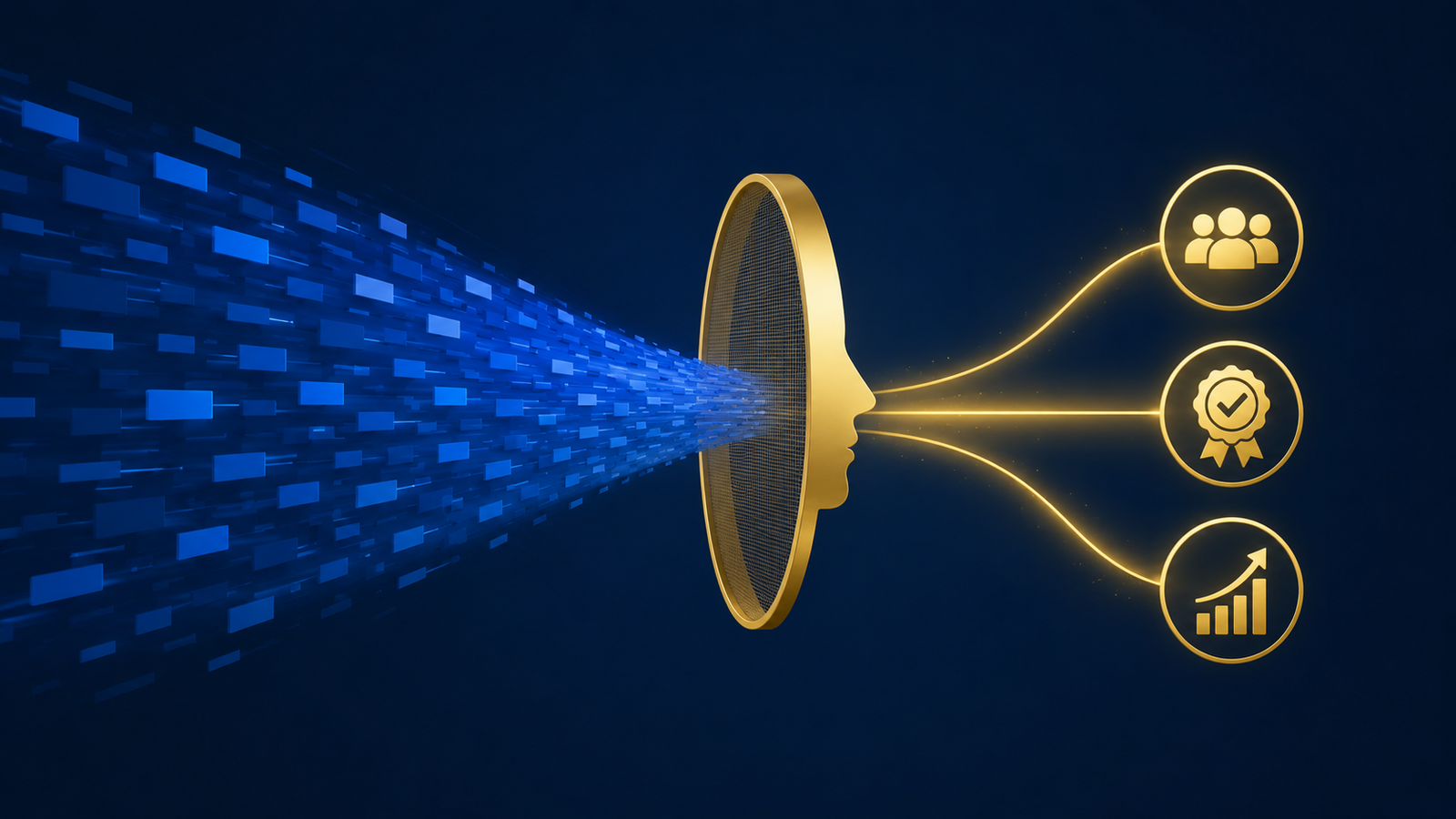
Artificial intelligence is helping organizations produce more code, content, analysis and communication than ever before.
That is impressive. But producing more work is not necessarily the same as performing better.
Recent reporting from Meta offers a useful example. According to internal data reviewed by Reuters, changes to Meta’s internal software and infrastructure increased 220% year over year as employees adopted AI tools. However, changes that delivered new or improved features to users increased only 36%.
During the same period, major technical and security incidents reportedly increased 40%, while the time employees spent “firefighting” those problems rose 70%.
I do not view this as an argument against AI. These tools can eliminate tedious steps, accelerate research and help capable people move from an idea to an initial result much faster.
But Meta’s experience raises an important question:
Are we measuring how much work AI helps us produce -or whether that work creates meaningful value?
Those are not the same thing.
Organizations frequently measure productivity through visible activity:
AI can accelerate nearly every one of these indicators. But activity only becomes productive when it contributes to a useful outcome.
More code does not automatically create a better product.
More communication does not guarantee greater clarity.
More hours online do not necessarily produce more innovation.
In my work with technology professionals and corporate teams, I have seen highly capable people become extremely efficient at staying busy. They move rapidly between meetings, messages, technical problems, and competing priorities.
From the outside, the activity looks impressive. Internally, they may feel scattered, exhausted, and unsure whether they are progressing on the work that matters most.
AI can reduce this pressure when it removes genuine friction. It can also intensify it by enabling an already overloaded system to produce even more work.
When production accelerates, the work does not always disappear. The bottleneck moves.
AI may generate code faster, but people must still review, test, secure, integrate, and maintain it. When AI produces a report or analysis, someone must verify the facts, identify missing context, and decide whether the output addresses the organization’s actual priorities.
A longitudinal study of professional software engineers describes this emerging responsibility as supervisory engineering work: directing, evaluating, and correcting AI-generated output.
Although 84% of the study’s participants reported improved productivity, the percentage experiencing deterioration in at least one area of their work experience nearly doubled—from 14% to 27%. Flow state and cognitive load were among the affected areas.
AI did not eliminate demanding work. It changed where that work occurred.
Read the longitudinal study of AI coding assistants.
When an organization increases production without increasing its capacity for judgment and review, employees become the final quality-control layer. They may spend less time creating original work and more time supervising an expanding stream of machine-generated activity.
That can be productive. It can also be mentally demanding in ways traditional productivity metrics fail to capture.
Meta’s internal numbers should be interpreted carefully. They do not prove that AI caused every result, nor should one company’s experience be generalized to every organization.
They do demonstrate why leaders need to distinguish production volume from meaningful outcomes.
Meta was also reorganizing teams around an “AI-native” operating model. Smaller teams would oversee AI agents while established management and product-development structures were reduced.
The transition reportedly created significant uncertainty. Meta’s internal employee-sentiment measure fell from 74% favorable to 55% favorable during the restructuring, workforce reductions and AI transformation.
Read the Reuters investigation.
There is a grounded lesson here for managers.
You cannot transform technology, job responsibilities, team structures and performance expectations simultaneously -and then treat the human response as a secondary concern.
People need to understand what is changing, what will be expected of them, and where their judgment still matters.
Without clarity, uncertainty becomes vigilance. Employees begin wondering whether they are using AI to improve their work or training a system to replace them.
That uncertainty consumes energy that could otherwise support learning, collaboration, and thoughtful experimentation.
I have spent more than 25 years in martial arts alongside my work in corporate wellness, project management, workforce strategy and coaching technology professionals.
One principle connects all of these environments:
Speed is only useful when it remains connected to awareness, timing and control.
In martial arts, moving faster without reading the situation can make you less effective. You expend more energy, create larger openings and respond to problems that were never the real threat.
Organizations can make the same mistake.
Acceleration without direction creates noise.
Power without control creates risk.
Effort without recovery eventually becomes degradation.
I have worked with professionals who did not need another productivity technique. They needed enough physical and mental bandwidth to use the tools they already had more intelligently.
Sometimes that begins with something practical: better sleep, fewer unnecessary interruptions, clearer priorities, a brief breathing practice between meetings, or permission to step away from a screen long enough to regain perspective.
These interventions may appear separate from AI strategy, but they affect the human capacity required to use AI well.
AI is a multiplier.
When a team has clear priorities, healthy communication, reliable review processes, and supportive leadership, AI can amplify those strengths.
When an organization has unclear goals, chronic overload, weak coordination, and low trust, AI can amplify those conditions too.
Technology cannot indefinitely compensate for poor organizational design.
It may temporarily hide the problem by helping people produce more. Eventually, the cost appears through rework, incidents, disengagement, turnover, or declining health.
This is why occupational wellness and workload design belong in the AI conversation. Sustainable performance depends on reasonable demands, healthy boundaries, and an environment where people can do meaningful work without remaining in continuous urgency.
Corporate wellness should not be used to make employees more tolerant of an unhealthy system. A breathing exercise cannot correct an unreasonable workload.
The deeper work is to strengthen the person while improving the system.
High-performing organizations need people who can:
These capacities depend on cognitive energy, emotional regulation, sleep, physical health, psychological safety and social connection.
At Origins Unity, I approach performance as an integrated system. Sleep, stress, movement, breath, relationships, work, habits, values, and environment continually influence one another.
This is also the foundation of our approach to holistic fitness and human performance. A person may understand exactly what to do, but insufficient recovery or chronic nervous-system activation can interfere with their ability to do it consistently.
If AI enables a company to produce substantially more work while employees become increasingly overloaded and occupied with correcting that work, the organization has not achieved sustainable productivity.
It has accelerated activity while weakening the human system responsible for turning activity into value.
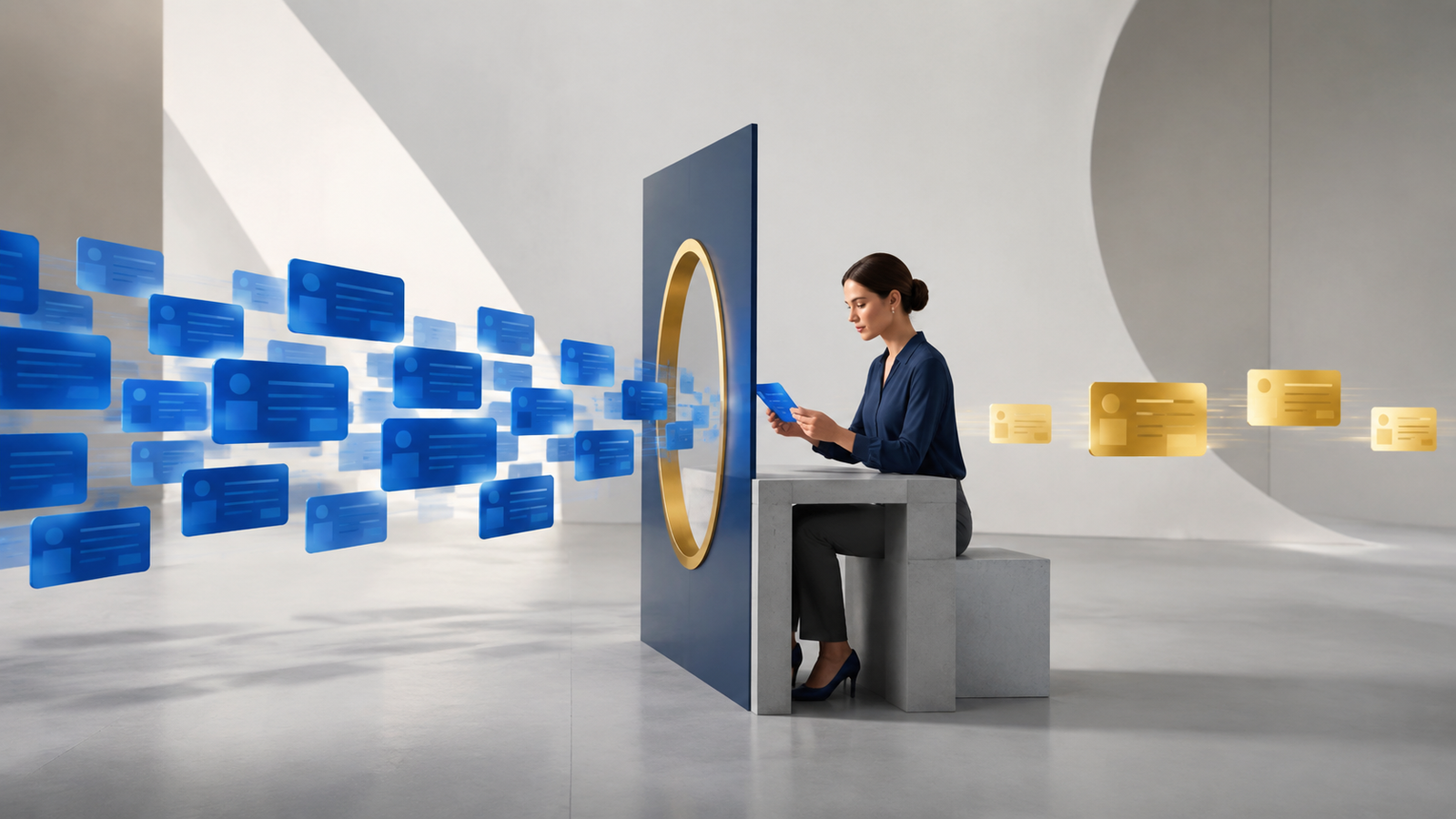
AI strategy and employee wellbeing are often assigned to different departments. I believe that separation is a mistake.
Employees need adequate human capacity to use AI responsibly.
Sleep deprivation affects attention and judgment. Chronic stress narrows perspective. Continuous task-switching fragments concentration. Low psychological safety discourages people from questioning flawed outputs or unrealistic plans.
Effective workplace wellness is therefore not simply a collection of benefits. It is part of the organization’s performance infrastructure.
In my work as a wellness coach and full-spectrum breathwork instructor, I teach people to regulate their state before asking more from their performance.
A breathing exercise will not solve every organizational problem. But the ability to pause, regulate and regain cognitive control can help a manager respond rather than react. It can help an employee notice an error, communicate a concern or enter a difficult conversation with greater composure.
Our guide to breathwork for corporate wellness explains how practical regulation tools can support focus and stress management.
These practices do not replace responsible AI governance or sound management. They support the people responsible for carrying those responsibilities.
Managers are increasingly expected to increase AI adoption, reorganize workflows, address employee uncertainty, maintain performance, reduce costs and detect new risks.
That is a considerable load.
A stressed, underslept or uncertain manager may unintentionally transmit that pressure to the team. Urgency travels quickly through an organization.
Managers need more than instructions to “drive adoption.” They need clear strategic boundaries, realistic metrics and the ability to say when a process is not working.
If a colleague asked me how to evaluate AI workplace productivity, I would recommend measuring:
A healthy AI culture should reward thoughtful questions, and not just enthusiastic compliance or greater production volume.
This reflects the human-first principles in our article on corporate wellness and emotionally intelligent workplaces.
I would encourage organizations to begin with five principles.
1. Clarify the outcome
Identify the human or business result the technology should improve. AI usage itself is not an outcome.
2. Redesign the workflow
Determine where AI genuinely reduces friction and where human judgment, review and accountability remain essential.
3. Protect human capacity
Do not automatically convert faster production into an expectation for unlimited output. Protect reasonable workloads, focused work and recovery.
4. Measure the whole system
Track outcomes, quality, rework, incidents and employee experience alongside speed and volume.
5. Learn before scaling
Test AI within defined workflows. Listen to the people doing the work, identify new bottlenecks and improve the system before expanding it.

The next evolution of corporate wellness is not simply helping employees calm down after work overwhelms them.
It is helping organizations create conditions in which people and technology can perform well together.
That means preparing managers to lead through uncertainty, helping employees preserve attention, designing healthier digital workflows, protecting recovery, and strengthening psychological safety.
AI can increase capacity.
Leadership determines whether that capacity becomes value.
Culture determines whether people can question, adapt, and learn.
Human health determines whether employees can continue performing intelligently under pressure.
The future of work will not belong simply to the companies that generate the most output. It will be shaped by organizations that create the clearest connection between technology, human capacity and useful outcomes.
Does AI improve workplace productivity?
AI can improve speed and efficiency for certain tasks, but results vary by task, workflow and employee experience. Leaders should measure quality, rework and useful outcomes alongside production volume.
How can AI affect employee wellbeing?
AI may reduce repetitive work, but it can also increase expectations, uncertainty and cognitive load. Its effect depends heavily on job design, communication, autonomy and leadership.
What is sustainable workplace performance?
Sustainable performance is the ability to produce valuable results consistently without degrading employee health, judgment, engagement or long-term organizational capacity.
What role does corporate wellness play in AI adoption?
Corporate wellness can strengthen attention, emotional regulation, communication, recovery and sound judgment. It should complement responsible organizational design—not compensate for unhealthy working conditions.
I believe AI can become a valuable workplace partner. Its success, however, will depend on whether organizations develop the human systems surrounding it.
At Origins Unity, we help organizations strengthen focus, resilience, recovery, communication and whole-person performance so their people can navigate demanding work with greater clarity.
If your organization is considering how AI, employee health and sustainable performance fit together, I would be glad to have a grounded conversation about what your managers and employees actually need.
Explore more insights in the Origins Unity holistic wellness blog.

Origins Unity is a Seattle wellness company that helps people and teams feel better and work better. We bring breathwork, holistic fitness, meditation, and qigong to corporate wellness programs, small groups, and one-on-one coaching. In person across Puget Sound, virtual nationwide.
Copyright © 2026 | Origins Unity LLC | Website Designed By 1Solutions