

A simple way to build balanced meals when you want less food tracking and more time for life.
By David Reveles, Founder of Origins Unity
Quick answer: To eat well without counting calories, picture your plate as a clock. In the Clock Method we teach at Origins Unity, 12–6 is vegetables, 6–9 is protein, 9–11 is carbohydrate foods, and 11–12 reminds you to include a modest amount of healthy fat. Adjust portions to your needs.
You already have enough to track: meetings, messages, deadlines, steps, and sleep.
Does every meal need to become another task in an app?
Food tracking can help some people learn about their eating habits. Others want a simpler starting point: a meal they can put together, enjoy, and repeat.
That is where the Clock Method comes in.
At Origins Unity, our nutrition philosophy starts with a practical question: Can you keep doing this when life gets busy?
The Clock Method is a visual guide for building a balanced meal. Imagine a clock face on your plate and move clockwise from the top.
| Clock section | What goes here | Easy examples |
|---|---|---|
| 12–6 | Non-starchy vegetables: about half the plate | Broccoli, greens, carrots, zucchini, peppers |
| 6–9 | Protein: about a quarter | Fish, eggs, chicken, firm tofu, tempeh |
| 9–11 | Carbohydrate foods | Rice, potatoes, oats, whole-grain bread |
| 11–12 | A reminder for a modest amount of healthy fat | Olive oil, avocado, nuts, seeds |
The clock describes where food goes, not when to eat it. It is not intermittent fasting or a required food-order sequence.
These are rough visual cues, not percentages of calories, grams, or daily nutrient needs. Food does not have to sit within exact lines.
The familiar plate method generally uses half vegetables, one-quarter protein, and one-quarter carbohydrate foods. The American Diabetes Association teaches that approach. Our version uses a clock to help you remember the parts and brings attention to fats already in the meal.
You do not need to fill a wedge with oil or add extra fat to complete the clock. Salmon, eggs, tofu, dressings, and cooking oils can already contribute fat. The Clock Method is a teaching tool, not a separately validated nutrition treatment.
Our approach connects eating with the rest of your life: movement, sleep, stress, work, and the people you share meals with.
Start with vegetables, include a clear protein source, add carbohydrate foods you enjoy, and use some fat for flavor and satisfaction.
Carbohydrates belong here. Rice, potatoes, oats, and fruit can fit into a balanced eating pattern. There is room for foods you enjoy, too; you do not have to give up every favorite food to work toward a healthier weight. NIDDK explains these common nutrition myths.
Keep ingredients for two or three reliable meals at home. Frozen vegetables, canned beans, microwave rice, prewashed greens, and simple proteins can help dinner happen on a busy night.
You do not need a new recipe every day. Repetition can save you time.
This plate is a starting point. A person training hard may need more carbohydrate foods, a larger meal, or an extra snack. Someone with a small appetite may do better with smaller meals more often.
Notice hunger, satisfaction, workout recovery, and how you feel between meals. Use that feedback to adjust. If you are repeatedly hungry soon after eating, your meal may need more food, including protein or carbohydrate foods.
Before a meal, put your phone down and take two comfortable breaths. Taste your food. Pause partway through and notice whether you are still hungry or comfortably satisfied.
This is a practical way to pay attention. There is no special breathing technique required.
Enjoy the birthday meal. Have the dessert you actually want. Return to your usual habits at the next meal.
A useful plan should work around busy weeks and social meals. For more ways to reduce daily effort, read our guide to fitness and nutrition plans for busy professionals.
| Meal | Vegetables | Protein | Carbohydrate foods | Fat cue |
|---|---|---|---|---|
| Weeknight dinner | Roasted broccoli and carrots | Salmon | Brown rice | Fat in salmon; cooking oil as needed |
| Plant-based lunch | Greens, cucumber, tomatoes | Firm tofu or tempeh | Rice or quinoa | A little dressing or seeds |
| Quick breakfast | Spinach and tomatoes | Eggs or tofu scramble | Toast or potatoes | Fat in eggs or cooking oil |
Choose foods you enjoy and tolerate. Gluten-free grains and dairy-free options can fit. Beans and lentils provide both protein and carbohydrates; they do not need to fit neatly into only one section.
Breakfast can look different. Oats with plain Greek yogurt or a protein-rich soy yogurt, berries, and seeds can be a useful option without recreating the plate shape.
Think about the ingredients rather than the shape.
You do not need to take a mixed meal apart or arrange everything perfectly.
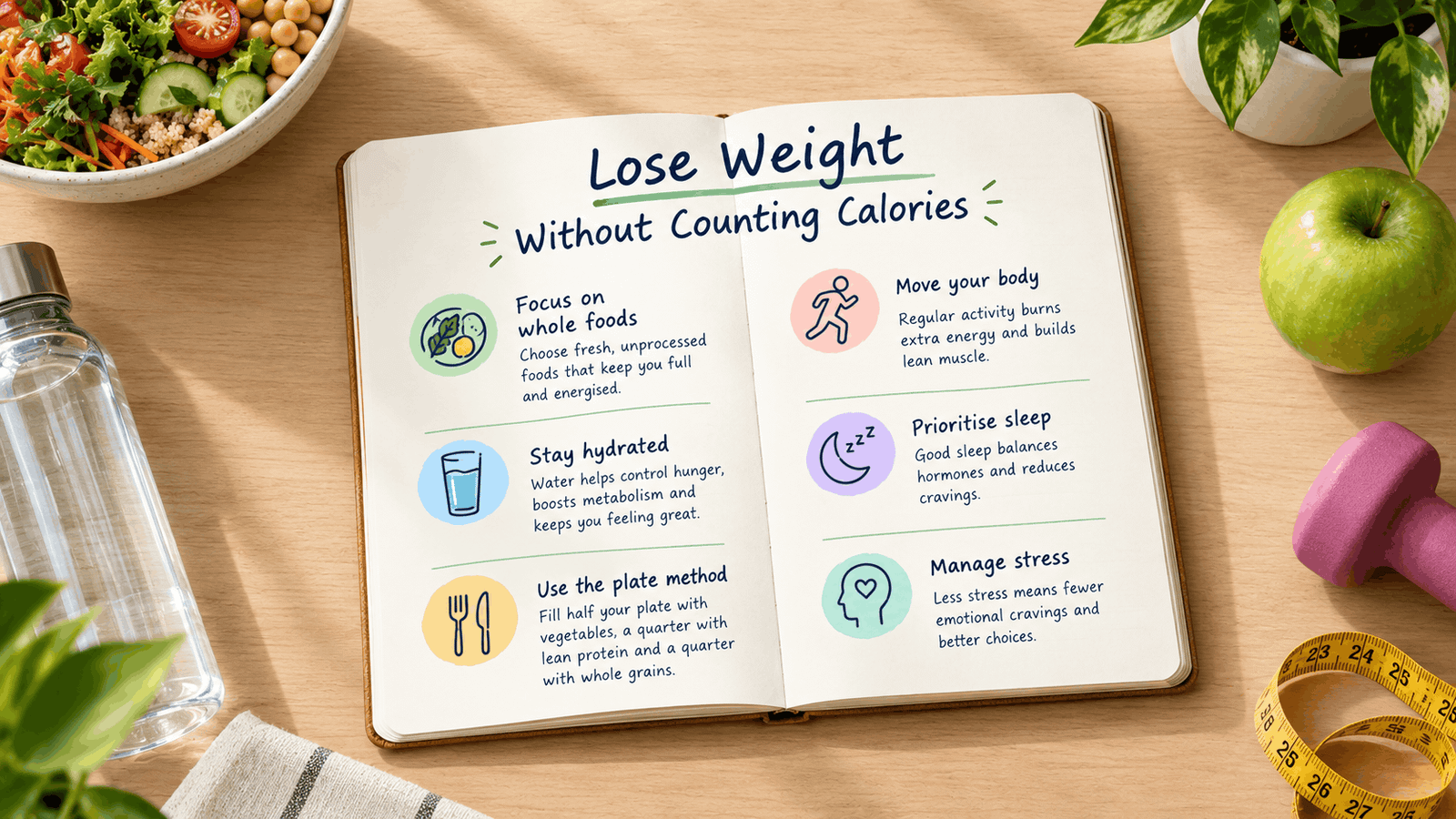
Yes. You can change food choices and portions without logging every bite. Weight loss still requires using more energy than you take in over time; the clock does not remove that requirement.
The method can provide structure, but it does not guarantee a calorie deficit. Plate size, portions, drinks, snacks, and sauces still matter. NIDDK’s portion guide offers more help with choosing amounts.
If fat loss is your goal, start with repeatable meals and look at your progress over several weeks. Change one habit at a time, such as replacing a regular sugary drink with water or making an often-used portion a little smaller. Keep checking that you are eating enough to function and train well.
Our article on sustainable fat loss and holistic fitness explores the wider routine.
Food is one of four levers that move daily energy. Sleep timing, movement, and stress load are the others, and they tend to work best in a particular order. If afternoon crashes and low energy are the real problem you are trying to solve, our guide to getting your energy back when you work a desk job shows how meals fit alongside the rest.
Choose lunch or dinner. Use the clock as your guide, eat, and notice what you would change next time.
Keep ingredients for that meal available. Repeat it on the days when you have less time.
You can start improving your meals before you start tracking them.
Fatigue to Fit by Origins Unity brings nutrition habits together with personalized training, stress management, recovery, and accountability.
We help you turn the basics into a routine you can use in everyday life.
Book a call with David to discuss your goals and whether Fatigue to Fit is a fit for you.
1. What is the difference between the Clock Method and the plate method?
Both use a visual meal structure. Our Clock Method uses 12–6 for vegetables, 6–9 for protein, 9–11 for carbohydrate foods, and 11–12 as a reminder for modest amounts of fat. The standard plate method commonly uses half vegetables, a quarter protein, and a quarter carbohydrate foods.
2. Do I have to count calories or macros?
No. The Clock Method gives you a starting structure without daily logging. Tracking can still be useful for specific goals or clinical needs, but it is not required to begin building balanced meals.
3. Do potatoes count as vegetables in the half-plate section?
For this tool, potatoes, corn, and other starchy vegetables fit in the carbohydrate section. Use foods such as greens, broccoli, carrots, and peppers for the vegetable half.
4. Where does fruit fit?
Fruit is welcome. It can be a carbohydrate food with a meal or part of a snack. It does not have to replace all the non-starchy vegetables in your main meals.
5. Do I need extra fat if my meal already contains it?
No. Count the fat already in foods, cooking oils, and dressings. The 11–12 section is a reminder, not a requirement to add more.
6. Is the Clock Method right for everyone?
Needs vary. Sports training, pregnancy, medical conditions, and a history of disordered eating may call for a different approach. If you use insulin or another medicine that can cause low blood sugar, coordinate carbohydrate changes with your care team. Therapeutic nutrition needs are best addressed with a qualified clinician or registered dietitian.
General nutrition education; not individualized medical nutrition therapy.
David Reveles is the founder of Origins Unity LLC, a Seattle-based holistic fitness and wellness company. His coaching connects movement, nutrition habits, stress management, and recovery with the demands of daily life.


Origins Unity is a Seattle wellness company that helps people and teams feel better and work better. We bring breathwork, holistic fitness, meditation, and qigong to corporate wellness programs, small groups, and one-on-one coaching. In person across Puget Sound, virtual nationwide.
Copyright © 2026 | Origins Unity LLC | Website Designed By 1Solutions