
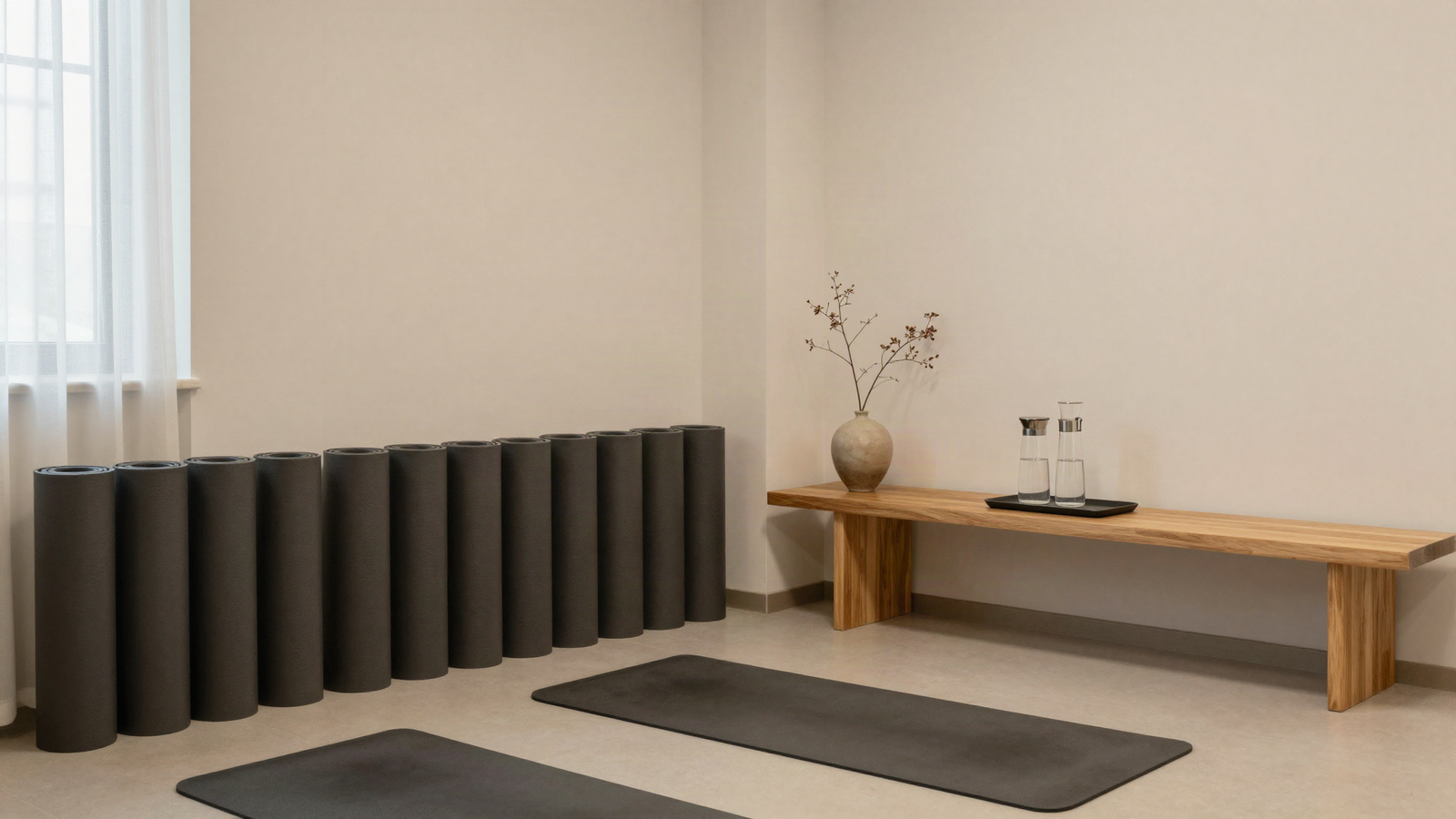
People don’t skip a fitness amenity or a wellness program because they lack motivation. They skip it because the next step isn’t obvious, the schedule doesn’t match their day, and nobody has made the first visit feel normal. Participation improves when you fix three operational things: put classes at times people are actually free, give every newcomer a low-stakes entry point in their first 30 days, and keep the same instructors in front of the same group long enough for familiarity to build. Those are scheduling and staffing decisions, not marketing decisions.
I’ve walked into a lot of beautiful, empty fitness rooms. Seattle buildings with better equipment than most commercial gyms and four names on the sign-in sheet. Offices with a wellness room that becomes storage by March. The equipment was never the problem. The program around it was.
Most residents don’t use the gym because nothing tells them when to go or what to do when they get there. An empty room with no schedule asks a person to design their own workout, in front of neighbors, on equipment they may not know how to use. That’s three decisions before anything good happens.
The other reason is social. Shared spaces run on familiarity. The National Apartment Association’s coverage of a 2025 Apartmentalize session reported that while the large majority of residents want connection with their community, only a small fraction feel genuinely connected (NAA). People walk past a room full of strangers. They walk into a room where they recognize the instructor.
Renters do care. The NMHC and Grace Hill 2024 Renter Preferences Survey Report, drawn from 172,703 renters, found 75% felt their wellbeing mattered to community management, and named access to wellbeing services among the top contributors to a positive sense of community. The interest is there. The structure usually isn’t.
In corporate settings the main reason is time, followed closely by not knowing the program exists. A NIOSH study found about 47% of U.S. workers had access to a workplace health promotion program, and among those with access, only 58% took part (NIOSH, 2019). It named time constraints, lack of awareness, little supervisory support, and no perceived need as the barriers, and recommended assessing your own workforce first.
That last point is the one most programs skip. The budget gets spent before anyone asks when people can actually attend. If your warehouse team works a rotating shift and every class is at noon, you’ve built a program for the office floor and told everyone else they don’t count.

Build the schedule from the population’s real constraints first, then add programming. I run it as a sequence.
1. Audit the day before you audit the equipment. In a building: commute patterns, how many residents work from home, when the building is quiet. In an office: shift structure, meeting density, which days people are on site. Three well-placed classes beat eight badly placed ones.
2. Pick two anchor times and defend them. Participation is built on repetition. A class that moves every month never becomes a habit, and two reliable weekly anchors are easier to staff.
3. Give every newcomer a 30-day entry point. An orientation, an equipment walkthrough, a beginner-labeled class. Remove the “I don’t know what to do here” barrier while habits are still forming.
4. Keep instructors consistent. This is where I spend the most management attention: hiring, scheduling, and supporting a small team so the same faces appear week after week. People return for a person, not a format. Turnover quietly cancels out everything else on this list.
5. Make the invitation specific. “Fitness classes available” is not an invitation. “Tuesday 6:30 a.m., 30-minute mobility, no experience needed, mats provided” is. Signage, email, and lobby screens carry that specificity or none of it works.
6. Build a non-class on-ramp. Some people will never attend a group class. Open-gym orientations, a walking group, or a single-topic workshop reach them instead — the role our group programs and breathwork events often play.
Measure repeat participation, not headcount. Twenty people who each came once means your marketing worked and your program didn’t. Nine people where seven come back next week means something real is forming.
I report attendance by time slot, repeat participation rate, instructor consistency, unique participants per month, and direct feedback. All observable, all defensible. What I won’t do is tell an owner that programming caused a change in renewals or property value — those move with rent, market conditions, and a dozen other variables. Evaluate programming as an operating cost against real usage and real feedback.
The mechanics are the same; the constraints differ. Residential programming competes with personal time and has to feel like an amenity, not an obligation. Corporate programming competes with meetings and needs visible manager support. If a manager books over the class every week, the class is dead.
Residential also carries a community dimension corporate often lacks. Events, seasonal programming, and resident experience feed the fitness calendar and vice versa, so I plan them together. Connecting corporate wellness and residential service delivery is most of what I do.
1. How long does it take to see participation improve?
Expect 60 to 90 days. The first few weeks tell you which time slots have any pull; the second month tells you whether people come back. Judging after two weeks leads you to cancel something that was about to work.
2. Should we survey residents or employees before launching?
Yes, but keep it short and ask about availability, not preferences. “What time could you realistically attend?” produces a usable schedule. “What classes do you want?” produces a wish list nobody shows up for.
3. Is it better to hire instructors in-house or use a vendor?
It depends on the consistency you can guarantee. Vendors start faster and simplify payroll, but rotating instructors undercut the familiarity participation depends on, so write consistency into the agreement. In-house gives more control over quality and scheduling, at the cost of management time for hiring, coverage, and payroll.
4. What’s the minimum viable program for a small property or office?
Two recurring weekly sessions, one consistent instructor, clear signage, and an orientation path for newcomers. That’s enough to generate repeat participation data. Add formats only once the anchors are reliably attended.
5. How do we reach people who will never come to a class?
Give them something that isn’t a class. Equipment orientations, self-guided routines posted in the space, a workshop, or a walking group reach a different population entirely. Our individual programs exist partly for this.
I’m David Reveles, Fitness & Lifestyle Director and founder of Origins Unity LLC, a holistic fitness and wellness company in Seattle. I lead fitness and lifestyle programming across luxury residential properties: class schedules, instructor hiring and support, payroll and vendor coordination, resident events, and the communications that make a program visible. I bring 25-plus years in fitness, martial arts, movement, and coaching, plus CAPM, Lean Six Sigma Black Belt, ITIL, NASM-CPT, Oxygen Advantage, and credentials in breathwork, trauma-informed mindfulness, yoga, qi gong, nutrition, meditation, and workplace wellness. Read more about our corporate programs or get in touch.

Origins Unity is a Seattle wellness company that helps people and teams feel better and work better. We bring breathwork, holistic fitness, meditation, and qigong to corporate wellness programs, small groups, and one-on-one coaching. In person across Puget Sound, virtual nationwide.
Copyright © 2026 | Origins Unity LLC | Website Designed By 1Solutions