

Most people know the feeling. You wake up already tired. Your thoughts race before your feet hit the floor. Small annoyances, a slow elevator, a curt email, feel bigger than they should. By evening, your body is wound tight, but your mind is too tired to relax, so sleep doesn’t come easily either.
This is often what ongoing, unmanaged stress looks like day to day. It rarely announces itself as a single dramatic event. More often, it shows up as a slow accumulation of tension that affects how you think, feel, sleep, and function, until it starts to feel like the default state rather than the exception.
The good news is that the body has built-in systems designed to help it move between stress and calm. Learning to work with these systems, rather than against them, is at the heart of what people mean when they talk about nervous system regulation. This guide breaks down what that actually means, what the science says, and practical, natural habits a beginner can start exploring today.
The nervous system is the body’s communication network. It carries signals between the brain and the rest of the body, coordinating everything from muscle movement to digestion to how you respond when something startles you.
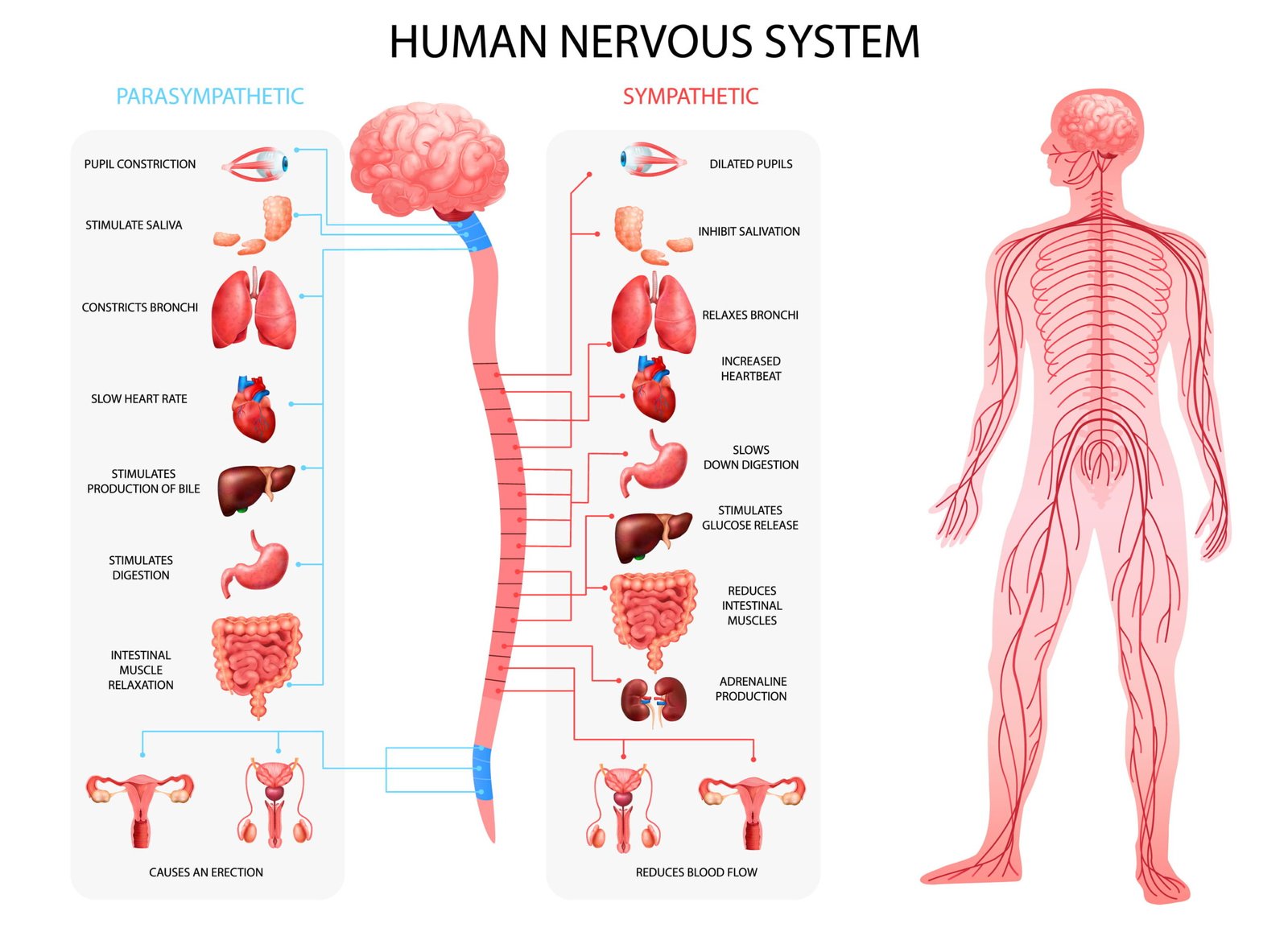
One part of this network, the autonomic nervous system, works largely without conscious effort. It manages processes like heart rate, breathing, and digestion in the background. This part of the nervous system has two main branches that are especially relevant to stress:
In a well-functioning system, these two branches work like a seesaw. Stress activates the sympathetic branch, and once the stressor is gone, the parasympathetic branch helps bring the body back to baseline. Under chronic or ongoing stress, however, this seesaw can spend more time tilted toward alertness, which is where many people start to feel persistently on edge, fatigued, or emotionally reactive.
It’s worth being clear about what this phrase does and doesn’t mean. Nervous system regulation is not a medical diagnosis, and it isn’t a single technique or a quick fix. It generally refers to the ongoing process of supporting your body’s natural ability to shift between alertness and calm as circumstances change, rather than staying stuck in one state.
Think of it less as “fixing” something broken and more as practicing habits that help your body respond to daily stress in a more flexible, adaptable way over time. For some people, this might mean feeling less reactive to minor frustrations. For others, it might mean recovering faster after a stressful event, or sleeping more easily at night.
These are wellness-oriented goals, not clinical outcomes, and individual experiences vary. If you are dealing with a diagnosed condition, persistent anxiety, or symptoms that interfere with daily life, these natural habits are best used alongside, not instead of, professional care.
None of the following practices are guaranteed fixes, and none work identically for everyone. They are widely discussed, generally low-risk habits that may support a healthier stress response over time, especially when practiced consistently.
Slow, Intentional Breathing
Breathing is one of the few autonomic functions you can consciously influence, which makes it a useful entry point. Slow, extended exhales are commonly discussed in relation to supporting a calmer physiological state, in part because longer exhalation is associated with parasympathetic activity.
Beginner example: Try inhaling for a count of four and exhaling for a count of six, for two or three minutes before a stressful meeting or before bed. There is no need for a formal practice; even a few slow breaths in a parked car or at your desk can be a starting point.
Prioritizing Adequate Sleep
Sleep and stress regulation are closely linked. Poor or insufficient sleep can make the body more reactive to daily stressors, while consistent, adequate sleep supports the body’s ability to recover.
Beginner example: Instead of overhauling your entire sleep routine at once, pick one small change, such as setting a consistent wake-up time or dimming screens thirty minutes before bed, and stick with it for two weeks before adding another.
Regular, Moderate Movement
Physical activity helps the body process stress hormones and is often associated with improved mood and reduced tension. This doesn’t require intense exercise; consistency tends to matter more than intensity for everyday stress support.
Beginner example: A fifteen-minute walk after lunch or a short stretching routine in the morning can be a realistic starting point, especially for someone new to regular movement.
Mindfulness and Present-Moment Awareness
Mindfulness practices involve paying attention to the present moment without judgment. Research in this area often points to associations with reduced perceived stress, though mindfulness is a skill that tends to develop gradually rather than immediately.
Beginner example: Spend two minutes noticing five things you can see, four you can hear, and three you can physically feel. This kind of simple grounding exercise doesn’t require a meditation app or prior experience.
Time Outdoors and in Natural Settings
Spending time in green or natural spaces is frequently associated with lower reported stress and improved mood, possibly through a combination of physical activity, sensory change, and reduced overstimulation.
Beginner example: A ten-minute walk in a nearby park, or simply sitting outside during a lunch break instead of staying indoors, can be an accessible way to build this habit.
Balanced Nutrition and Hydration
While no single food regulates the nervous system, stable blood sugar and adequate hydration are generally understood to support steadier energy and mood throughout the day, which can indirectly affect how equipped you feel to handle stress.
Beginner example: Pairing meals with some protein and fiber, and keeping a water bottle nearby, are modest but realistic changes to start with.
Social Connection
Supportive social interaction is consistently linked to emotional well-being. Talking with a trusted friend, family member, or community can offer a sense of safety that supports the body’s ability to settle after stress.
Beginner example: Scheduling a short, regular check-in with a friend, even a fifteen-minute phone call once a week, can help build this into a sustainable routine rather than something that only happens during a crisis.
Structured Relaxation Practices
Techniques such as progressive muscle relaxation, gentle stretching, or guided relaxation exercises are often used to help the body shift out of a heightened state. These are generally considered low-risk and accessible for beginners.
Beginner example: Tensing and then releasing each muscle group, starting from your feet and working upward, for five to ten minutes before bed is a common beginner-friendly version of this practice.
Consistent Daily Routines
Predictability itself can be calming. Irregular schedules, especially around sleep and meals, can add a layer of unpredictability that may compound stress. A steady daily rhythm gives the body more consistent cues about when to be alert and when to wind down.
Beginner example: Anchoring your day around two or three fixed points, such as a consistent wake time, a regular lunch break, and a wind-down period before bed, can create a helpful sense of structure without requiring a rigid schedule.
Beginners often run into a few predictable obstacles when starting out.
Expecting instant results. Nervous system regulation is generally a gradual process. A single breathing exercise or one good night’s sleep is unlikely to produce a dramatic, lasting shift, and that’s normal.
Trying to change everything at once. Attempting to adopt eight new habits simultaneously often leads to burnout or abandoning the effort altogether. Starting with one or two small, realistic changes tends to be more sustainable.
Treating these practices as a cure. Natural habits can be a meaningful part of supporting everyday stress and emotional well-being, but they are not a substitute for appropriate medical or mental-health care when it’s needed.
Judging progress too harshly. Some days will feel harder than others regardless of how consistent your habits are. Progress in this area tends to look like gradual, uneven improvement rather than a straight line.
How can I regulate my nervous system naturally?
You can support nervous system regulation through simple, consistent habits such as slow breathing, adequate sleep, moderate physical activity, mindfulness, time outdoors, balanced nutrition, hydration, social connection, relaxation exercises, and consistent daily routines. Start with one or two manageable habits rather than changing everything at once.
What is nervous system regulation?
Nervous system regulation refers to supporting the body’s ability to shift between states of alertness and calm in response to changing situations. It is not a medical diagnosis or a single technique. Healthy regulation involves being able to respond to stress and gradually return toward a calmer baseline.
What is the fastest natural way to calm the nervous system?
Slow, intentional breathing can be a simple way to encourage a calmer state in the moment. For example, you can try inhaling four counts and exhaling for six counts for two to three minutes. Results vary, and breathing exercises are not a substitute for professional care when symptoms are severe or persistent.
Does deep breathing help regulate the nervous system?
Slow, controlled breathing may help support a calmer physiological state. Breathing is also one of the autonomic functions that can be consciously influenced. A simple approach is to use a slightly longer exhale than inhale, such as breathing in for four counts and out for six.
Can sleep help regulate the nervous system?
Yes. Sleep and stress regulation are closely connected. Poor or insufficient sleep can increase reactivity to everyday stress, while consistent, adequate sleep supports recovery. Maintaining a regular wake-up time and reducing screen exposure before bed can be practical starting points.
Does exercise help regulate the nervous system?
Regular, moderate movement may support stress management, mood, and recovery. You do not necessarily need intense workouts. A short walk, gentle stretching, or another activity you can do consistently may be a useful starting point.
Can mindfulness help calm the nervous system?
Mindfulness may help reduce perceived stress by encouraging present-moment awareness without judgment. Beginners can start with a simple grounding exercise, such as noticing what they can see, hear, and physically feel around them.
The habits described in this guide are general wellness information, not medical advice, and they are not intended to diagnose, treat, or replace care for any condition.
If you are experiencing persistent, severe, or disruptive symptoms, such as ongoing anxiety, panic, low mood, or stress that is interfering with your work, relationships, or daily functioning, it’s important to speak with a qualified healthcare provider or mental-health professional. They can help determine what additional support may be appropriate for your specific situation.
Supporting your nervous system naturally isn’t about achieving a permanently calm state or eliminating stress altogether, since some stress is a normal and even useful part of life. It’s about gradually building habits, slower breathing, better sleep, regular movement, moments outdoors, and steady connection with others, that help your body move more easily between alertness and rest. Taking a holistic wellness approach can also help you look at these habits as connected parts of overall well-being rather than isolated solutions.
Start small. Pick one habit from this guide that feels realistic for your current routine, give it a few consistent weeks, and notice what shifts, if anything, before adding another. Self-awareness, patience, and consistency tend to matter far more than perfection. Over time, these small, sustainable choices can add up to a meaningfully steadier relationship with everyday stress.

Origins Unity LLC Gym Yoga Studio Meditation Center offers Holistic Health and Wellness Coaching, Corporate Wellness Programming, and more. We are Mental Health Advocates and aim to produce wellbeing through natural means. Our services are for individuals, groups, and companies.
Copyright © 2024 | Origins Unity LLC | Website Designed By Skywalk Digital Solutions, LLC