
You do not need an established meditation practice, advanced yoga experience, or a perfectly calm mind to attend a wellness retreat.
You simply need ti recognize that your normal routine is no longer giving you enough space to listen, recover, or reconnect.
For many people, that realization leads to a practical question:
What should I expect from my first wellness retreat near Seattle?
The answer depends on the retreat. Some programs center on silent meditation. Others emphasize yoga, breathwork, spirituality, fitness, emotional healing, or relaxation. Certain retreats expect participants to have an existing practice, while others are deliberately designed to welcome beginners.
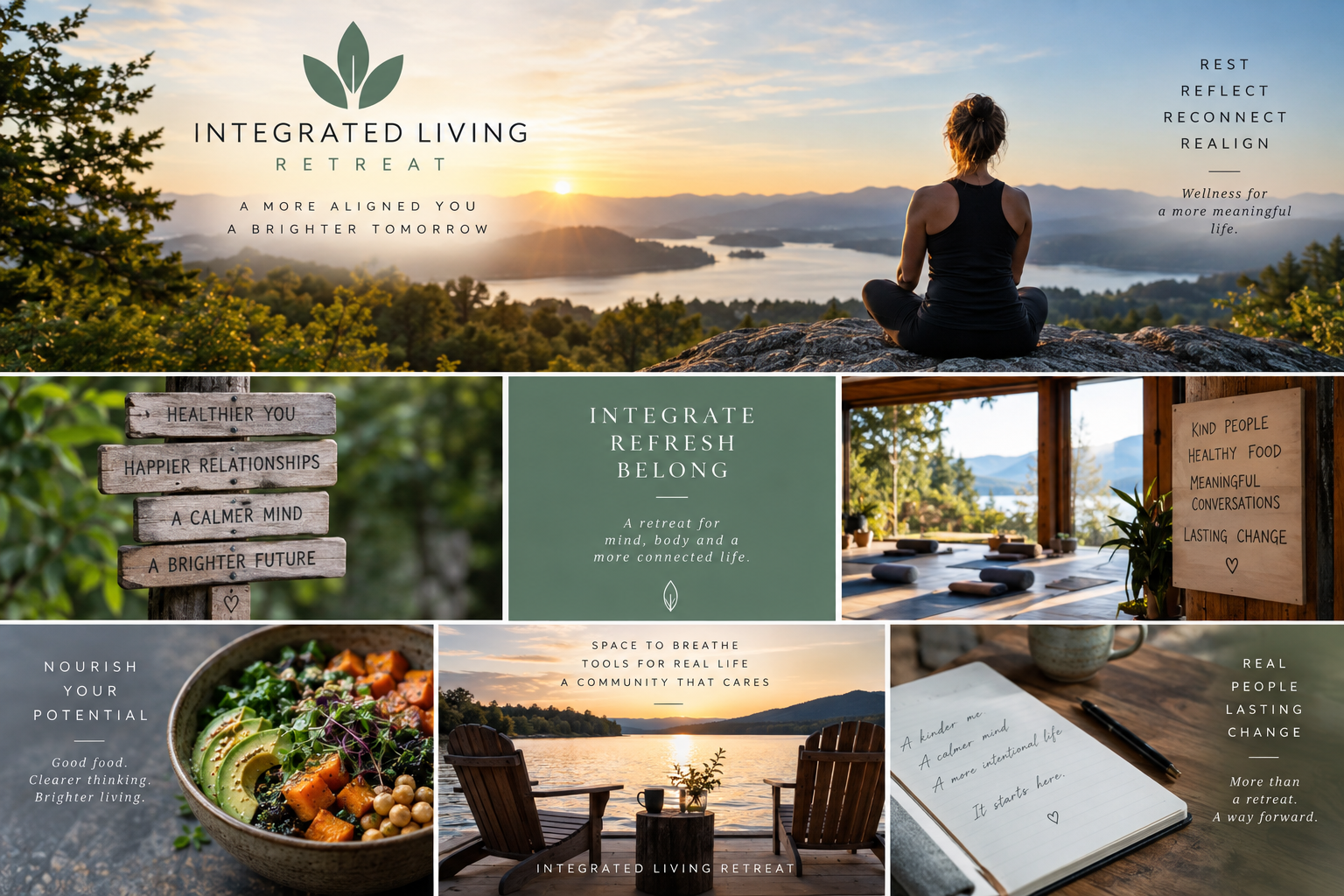
Integrated Living Retreats offer another possibility: an approachable weekend immersion in multiple practices that support the mind, body, emotions, relationships, and connection with nature.
Here is what to consider before attending your first Seattle-area wellness retreat—and how to choose an experience that meets you where you are.
A wellness retreat creates protected time away from your normal environment and responsibilities.
Instead of trying to fit self-care between meetings, errands, messages, and household tasks, you enter a setting specifically organized around practice, restoration, reflection, and learning.
Depending on the program, a retreat may include:
The schedule may be highly structured or intentionally spacious. Neither format is automatically better. The important question is whether the pace, practices, and expectations match your experience and goals.
Many are, but you should read the retreat description carefully.
Seattle Insight describes its daylong mindfulness format as an accessible opportunity for sustained practice and includes guided meditation, sitting and walking meditation, teachings, and dialogue. Its introductory day of mindfulness is specifically designed for beginners. Seattle Insight Meditation Society
Other programs recommend previous experience before attending an intensive, multi-day silent retreat. Mindfulness Northwest, for example, advises newer practitioners to begin with a class or single-day experience and recommends teacher-led mindfulness experience before its longer silent retreats. Mindfulness Northwest
This distinction matters.
An extended silent meditation retreat can offer depth, but it may not be the most comfortable first step for someone who wants instruction, conversation, movement, variety, and community.
Integrated Living is not a silent meditation retreat. It includes moments of stillness and personal reflection, but participants also receive guidance, practice different modalities, move their bodies, connect with nature, and learn alongside others.
Many retreats go deeply into one discipline. An integrated retreat explores how several dimensions of well-being influence one another.
Your breath affects how you experience effort and emotion. Movement affects energy and attention. Mindfulness helps you recognize patterns before automatically reacting to them. Nature changes the context in which you observe yourself. Community can provide perspective, support, and a sense of belonging.
At Integrated Living Retreats, the experience is organized around six interconnected categories.
Participants encounter different ways of working with the breath rather than treating all breathwork as the same.
Practices may be energizing, balancing, contemplative, or restorative. Each method is presented as a tool with a particular purpose—not as a cure or a replacement for appropriate medical or mental-health care.
Mindfulness practices help participants recognize what is happening in the body, mind, and surrounding environment.
These may include focused attention, open awareness, body scans, sensory observation, and techniques for working with distraction.
The purpose is not to eliminate every thought. It is to become more aware of thoughts, sensations, and reactions as they arise.
Guided meditation offers structure for people who find it difficult to sit quietly without direction.
The retreat may incorporate visualization, mantra, intention setting, loving-kindness, heart-centered practices, and other contemplative approaches. This variety allows beginners to discover that meditation is not a single rigid technique.
Yoga, qigong, pranayama, and intentional movement provide ways to explore attention through the body.
The sessions are not competitions and do not require advanced flexibility. Participants are encouraged to work within their present capacity and use appropriate modifications.
Journaling, free association, progressive muscle relaxation, and body-centered reflection can help participants notice what they have been carrying.
No one should be pressured into disclosure or emotional intensity. Responsible emotional work respects choice, pacing, personal boundaries, and the limits of the retreat setting.
Nature is part of the retreat experience rather than merely a backdrop for photographs.
Mindful walking, sensory awareness, contemplation, earth-based practices, and optional deliberate cold exposure can provide different ways to explore presence and response.
The goal is not to complete every possible activity. It is to experience enough variety to identify the practices that genuinely resonate with you.
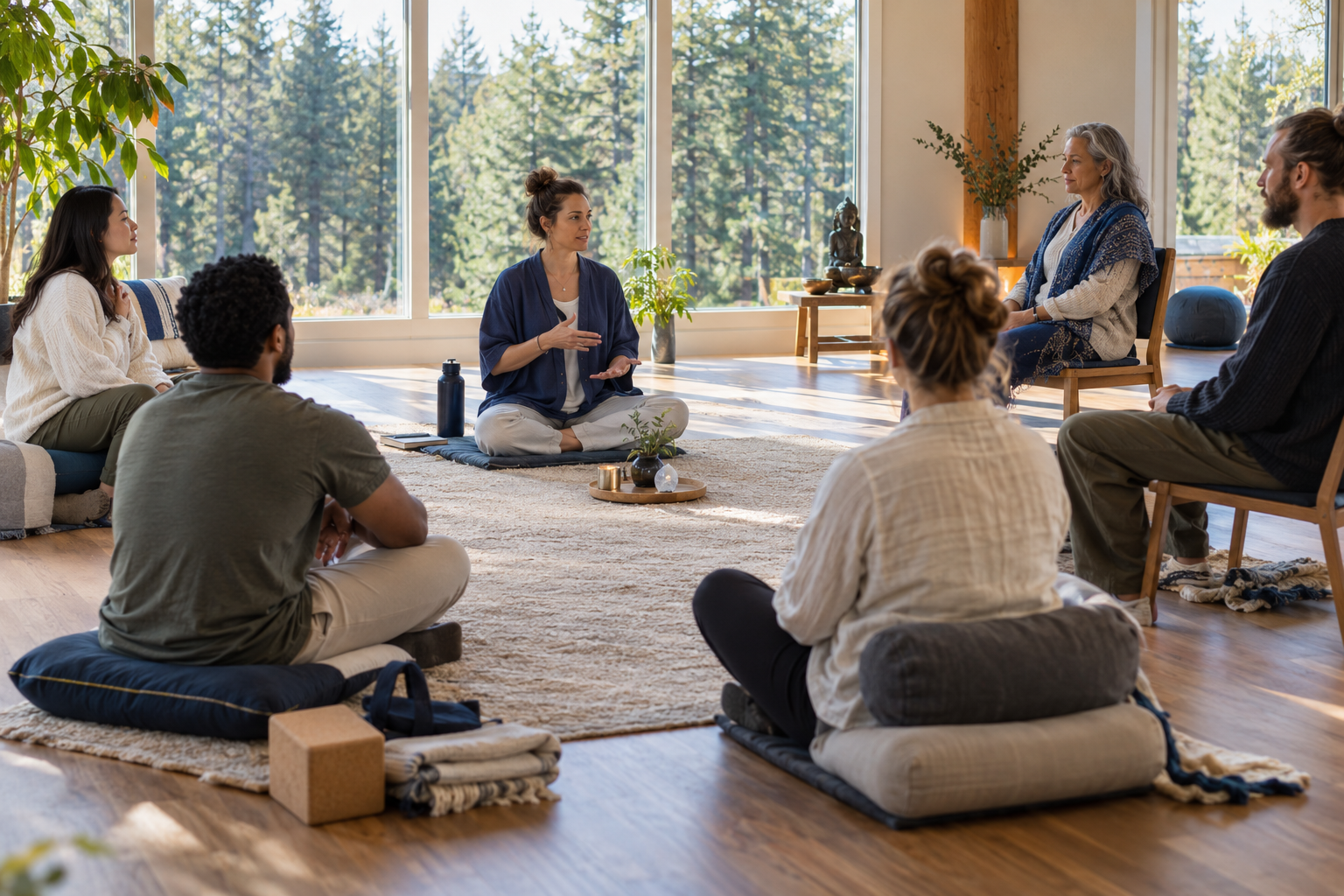
A well-designed retreat usually has a rhythm.
You may move from guided practice into quiet reflection, from stillness into movement, or from an individual exercise into a community experience. Some sessions may feel peaceful. Others may reveal restlessness, fatigue, emotion, resistance, or mental noise.
That does not mean you are doing the retreat incorrectly.
Stepping away from your routine can make you more aware of experiences that constant activity normally keeps in the background. A retreat is not valuable only when every moment feels relaxing.
A useful retreat gives you enough support and space to observe what emerges without requiring a particular outcome.
Distance can help interrupt routine, but a retreat does not have to require air travel.
Whidbey Island gives Seattle-area participants a meaningful geographic transition while remaining within Western Washington. The ferry crossing, forests, shoreline environment, and quieter pace can help establish a clear boundary between everyday responsibilities and retreat time.
Integrated Living takes place at Earth Sanctuary in Langley. According to its official website, Earth Sanctuary encompasses 72 acres and is being restored through a 500-year plan intended to support mature forest and biodiversity. Its retreat environment includes trails, ponds, contemplative spaces, and sacred sculptures. Earth Sanctuary
The location is significant because contemplation changes when you are no longer surrounded by the same screens, rooms, traffic, and signals that organize your normal day.
Always follow the organizer’s specific packing list. For an autumn retreat in Western Washington, useful items will often include:
Avoid packing as though you need to prepare for every possible situation. Retreat practice often benefits from simplicity.
You do not need to manufacture a breakthrough or arrive with a perfectly defined intention.
A few questions can help you enter the weekend with greater clarity:
The last question is especially important.
A retreat should not leave you feeling that well-being is available only when you can escape to a beautiful location. The experience should help you identify practices that can return home with you.
Arriving alone can feel vulnerable, particularly when the retreat includes unfamiliar practices.
Remember that many participants may be entering the same room with similar uncertainty. They may also be wondering whether they belong, whether they will be able to meditate, or whether they will feel comfortable in the group.
A healthy retreat environment does not demand instant intimacy.
It creates opportunities for connection while respecting solitude and boundaries. You should be able to participate without being pressured to disclose private experiences or perform vulnerability for the group.
Attending alone may also give you greater freedom to engage with the retreat without remaining inside your usual social role.
A weekend cannot resolve every source of stress or replace ongoing medical, psychological, or social support.
It can, however, create enough distance to observe familiar patterns more clearly. It can introduce practices you have never experienced directly. It can give you structured time to rest, move, reflect, connect, and reconsider what you want to carry forward.
The value may be surprisingly practical:
Integrated Living’s message—“A lifetime of practices in a single weekend”—does not mean mastering a lifetime of disciplines in two days.
It means meeting a broad collection of practices that you can continue exploring for years.
The next Integrated Living Retreat will be held at Earth Sanctuary on Whidbey Island:
Dates: October 2–4, 2026
Location: Earth Sanctuary, Langley, Washington
Format: Full weekend with a Saturday-only option
Hosts: David Reveles of Origins Unity LLC and Jason Dean of Aware4All
This experience is designed for people who want more than a passive getaway—but do not want to enter an inaccessible or highly rigid retreat environment.
Come to explore breathwork, meditation, mindfulness, movement, emotional reflection, nature, and community.
Leave with a clearer sense of which practices belong in your life.
Explore the Integrated Living Retreat and apply
A lifetime of practices in a single weekend.
Is the Integrated Living Retreat suitable for beginners?
Yes. The retreat presents multiple practices with guided instruction and does not require advanced meditation, yoga, breathwork, or qigong experience. Participants should honor their physical and emotional boundaries throughout the weekend.
Is Integrated Living a silent meditation retreat?
No. The weekend includes meditation, stillness, and individual reflection, but it also incorporates instruction, movement, group practice, and community interaction.
Can I attend without knowing anyone?
Yes. Participants can attend individually. The retreat includes opportunities for healthy connection without requiring forced disclosure or immediate intimacy.
Can I attend for only one day?
A Saturday-only option is available for people who cannot attend the entire Friday-through-Sunday retreat.
What practices are included?
Practices may include breathwork, mindfulness, meditation, yoga, qigong, pranayama, journaling, progressive muscle relaxation, emotional reflection, nature connection, and deliberate cold exposure.
Do I need to be physically fit?
Advanced fitness is not required. Participants should review the schedule, communicate relevant limitations, use available modifications, and decide whether each optional activity is appropriate for them.
Is a wellness retreat a substitute for therapy or medical care?
No. A wellness retreat can offer education, reflection, community, and experiential practices, but it is not a substitute for individualized medical or mental-health treatment.
Where is Earth Sanctuary?
Earth Sanctuary is in Langley on Whidbey Island, Washington. Its official site describes a 72-acre nature reserve with trails, ponds, sacred spaces, sculptures, and retreat facilities.
What should I bring?
Bring comfortable layered clothing, rain-ready footwear, a water bottle, journal, toiletries, personal medications, and any retreat-specific equipment listed by the organizers.
How do I register?
Review the current event details and follow the application or ticket instructions on the Integrated Living Retreat website.

Origins Unity is a Seattle wellness company that helps people and teams feel better and work better. We bring breathwork, holistic fitness, meditation, and qigong to corporate wellness programs, small groups, and one-on-one coaching. In person across Puget Sound, virtual nationwide.
Copyright © 2026 | Origins Unity LLC | Website Designed By 1Solutions