
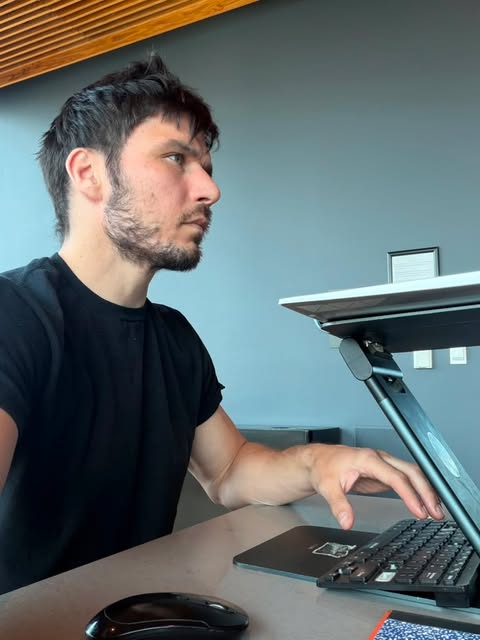
Stuck at a 9-5, Living on Coffee and Snacks? Here’s How to Stay Fit and Eat Healthy Anyway. Healthy desk job habits don’t have to be complicated, and they definitely don’t require a perfect diet, a gym membership, or an extra two hours in your day. I work with busy professionals who are already stretched thin, and the shifts that make the biggest difference are almost always smaller than people expect.
Most of the people I work with come to me with the same story.
They wake up already behind. Coffee before anything else. Sit for eight or nine hours straight. By mid-afternoon the energy is gone but the to-do list isn’t, so they grab whatever’s nearby and push through. They get home too tired to cook, too wired to sleep well, and wake up the next morning to do it all over again.
Nobody in that loop is lazy. Nobody lacks willpower.
They’re just stuck in a system that was never built to support a human body.
Here’s what actually helps.
Once you understand what’s actually happening in a standard workday, the fatigue starts to make a lot more sense.
Sitting for long periods slows your circulation and metabolism. Your body was built to move, and when it doesn’t, everything gets sluggish. Your energy, your thinking, your mood all take the hit. This isn’t a mindset issue. It’s physiology.
Then there’s stress. Sustained, low-grade, never-really-switches-off work stress keeps your nervous system in a kind of permanent low-level alarm state. And a nervous system in alarm mode does very predictable things. It craves sugar, it craves caffeine, it makes it nearly impossible to choose the salad over the biscuit at 3pm.
Not a character flaw. Biology.
When those two things combine with inconsistent nutrition and disrupted sleep, you get the classic professional energy crash. Fatigue that doesn’t go away on weekends. Brain fog that coffee can’t actually fix. A general feeling of running on empty no matter how much you rest.
The solution isn’t pushing harder through it. It’s understanding what your body is actually responding to.
Before coffee. Before your phone. Before emails.
Five minutes. That’s genuinely all this takes.
A short breathwork practice in the morning does something most people don’t expect. It shifts your nervous system out of that low-level stress response before the demands of the day have a chance to put it there. I’ve seen this work for executives, teachers, lawyers, and nurses. The job title doesn’t matter. The nervous system responds the same way.
Try extending your exhale: breathe in for three counts, out for six. Or box breathing if you want something more structured: five in, five hold, five out, five hold. Even just four counts in and four counts out, done for three minutes, is enough to feel a difference.
What this does physiologically is reduce cortisol and activate the part of your nervous system responsible for calm focus rather than reactive stress. The research on this is solid. More importantly, the people I work with feel it within days of starting.
Do this before anything else. It makes every other habit on this list noticeably easier.
Here’s where most people get desk job fitness completely wrong.
They think the answer is a longer workout. If I just made it to the gym more often, everything would be fine. But sitting for eight hours and then doing an hour of exercise still leaves you with seven hours of metabolic slowdown every single day. The math just doesn’t work in your favour.
What works better is moving little and often throughout the day.
Ten squats when you get up to make a coffee. A five-minute walk before you sit back down after lunch. Stretching your hips and spine when you feel that familiar afternoon stiffness. Taking phone calls on your feet instead of sitting.
These are movement snacks. They’re short enough to do without thinking, and they interrupt the physical stagnation that causes so much of the afternoon fatigue. Over a full workday they add up to more than most people realise, in steps, in circulation, in energy, and in how you actually feel by the time you get home.
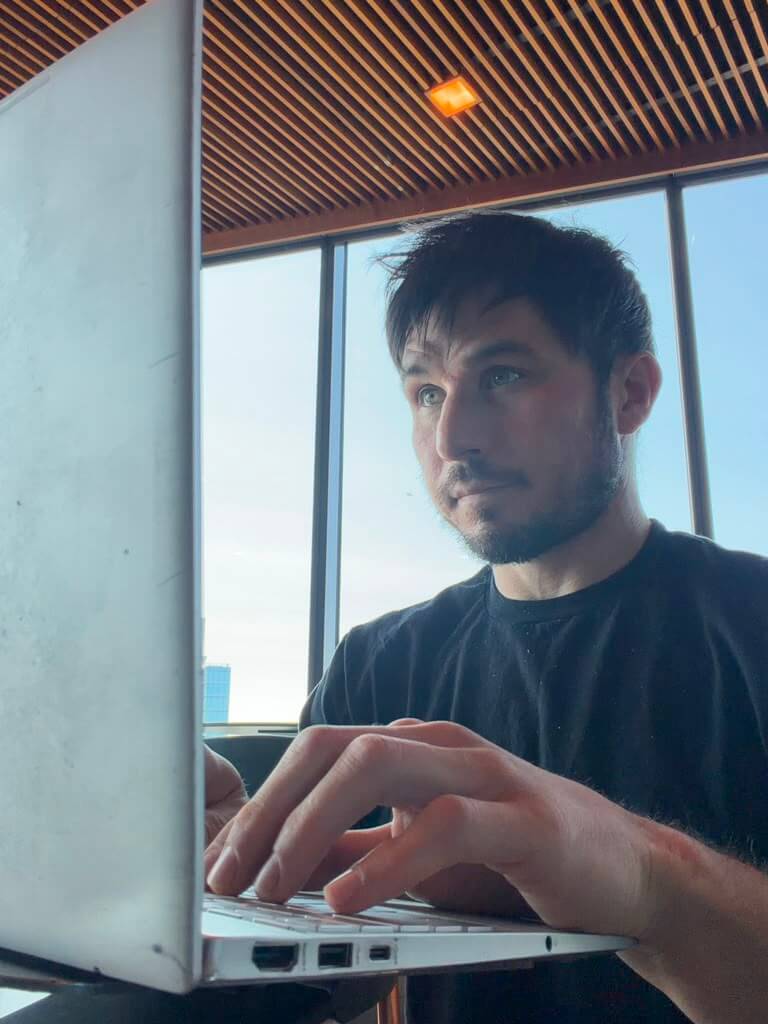
The 3pm crash is not random and it’s not inevitable.
It’s almost always a blood sugar crash, caused by what you ate, or didn’t eat, two to three hours earlier.
High-sugar snacks, and a lot of office snacks fall into this category even when they seem healthy, cause a fast rise in blood sugar followed by an equally fast drop. That drop is what the afternoon tiredness actually feels like from the inside.
Switching to foods that release energy more steadily makes a noticeable difference. Greek yogurt, a handful of nuts, fruit with some protein, boiled eggs, hummus and vegetables, a simple protein smoothie. None of these are complicated or expensive. They just don’t cause the crash.
One practical thing I tell almost every client: if you’re reaching for coffee after 2pm most days, start by looking at what you ate for lunch. Fix that first and the coffee habit usually starts to shift on its own.
Yes. Genuinely.
The belief that you need an hour in the gym to stay healthy is probably one of the most damaging ideas in mainstream fitness, because when that hour isn’t available, which for most busy professionals is most of the time, people do nothing instead.
Fifteen minutes, four or five times a week, done consistently, produces real results. Not social media results. Real improvements in strength, metabolism, energy, and how your body handles stress over time.
Try three rounds of this: ten squats, ten push-ups, twenty walking lunges, thirty-second plank. No equipment needed. No gym required. It can be done in a living room before the rest of the house wakes up.
Something you actually do beats something you keep planning to do every single time.
Most people who rely heavily on caffeine aren’t really addicted to coffee. They’re relying on the temporary relief it provides from a nervous system that’s chronically overloaded.
Coffee doesn’t fix fatigue. It borrows against tomorrow’s energy to get through today. And the more stressed and sleep-deprived you are, the more you need to get the same effect, until eventually it stops working and you’re drinking it out of habit and desperation more than anything else.
The longer-term fix is building genuine recovery into the day. Short breathwork breaks. A proper lunch away from your screen. A five-minute walk that isn’t spent checking your phone. Moments where your nervous system actually gets to switch off rather than just running at a slightly lower volume.
When stress genuinely comes down, energy follows without much effort. That’s not a coaching cliche. It’s what happens physiologically when your body stops burning through its reserves just to stay functional.
Not with all of this at once.
Pick one thing from this post. Just one. Practice it consistently for two weeks and pay attention to what shifts.
Sustainable change doesn’t come from dramatic overhauls. It comes from small, well-chosen adjustments that you stick with long enough for them to compound quietly in the background. Most of the people I work with are genuinely surprised by how much difference one or two targeted habits make before they’ve changed anything else.
Your body is not broken and it is not the enemy.
It is responding logically to the environment it has been placed in. That’s really what building healthy desk job habits comes down to: one small, consistent shift at a time.
Change the environment, even slightly, and it responds. That’s the whole idea.
At Origins Unity, we work with busy professionals to build personalized systems for energy, resilience, and long-term health. These are systems that fit around real life, not an idealized version of it.
If any of this resonates with you, we would love to have a conversation. Book a consultation and let’s look at what your body actually needs.

Origins Unity is a Seattle wellness company that helps people and teams feel better and work better. We bring breathwork, holistic fitness, meditation, and qigong to corporate wellness programs, small groups, and one-on-one coaching. In person across Puget Sound, virtual nationwide.
Copyright © 2026 | Origins Unity LLC | Website Designed By 1Solutions