

If a breathing exercise makes you dizzy, lightheaded, tingly or
unsteady, the safest response is simple: stop the technique, return to
normal unforced breathing and sit or lie down somewhere safe.
Do not treat dizziness as a goal. Do not stand up quickly. Do not add
a longer breath hold to “push through.” And never perform strong
breathing or breath-hold practices in water, while driving, near an edge
or anywhere a brief loss of awareness could cause an injury.
For many people, these sensations happen because the breathing
pattern has become faster or larger than the body needs. That can lower
carbon dioxide in the blood. Carbon dioxide is often discussed as if it
were merely waste, but it also plays an important role in blood
chemistry and the regulation of cerebral blood flow. A review of
hyperventilation and fainting describes how hyperventilation-induced low
carbon dioxide can reduce blood flow to the brain and contribute to
lightheadedness or, in some circumstances, loss of consciousness (Journal of Applied
Physiology review).
That explanation is useful, but it is not the only possible
explanation. Dizziness, chest discomfort, breathlessness and rapid
breathing can also accompany medical conditions. The National Library of
Medicine advises that rapid breathing for the first time may require
urgent assessment, particularly when it occurs with pain, fever,
bleeding or other symptoms (MedlinePlus).
The practical lesson is not to fear the breath. It is to respect
dose.
The
short answer: why can breathing exercises make you lightheaded?
Breathing exercises can cause lightheadedness when you breathe out
more carbon dioxide than your body is producing. This is more likely
when the practice includes:
- rapid breathing;
- very large breaths;
- repeated forceful exhales;
- a pace or depth that feels difficult to sustain;
- long breath holds after high-volume breathing;
- standing, heat, cold exposure or another stressor at the same time;
or - anxiety about the sensations themselves.
The technical term for breathing more than current metabolic demand
is hyperventilation. Hyperventilation does not always
look like obvious panting. Someone can breathe slowly and still
overbreathe if every breath is unnecessarily large.
That is why the familiar instruction to “take a deep breath” can be
misleading. If deep means comfortable, three-dimensional movement of the
lower ribs and diaphragm, it may be useful. If deep means pulling in the
biggest possible breath over and over, it may create the very sensations
the person is trying to reduce.
Dizziness is
information, not a badge of progress
Strong breathwork can intentionally produce intense sensations. Some
practices use high ventilation, forceful rhythms or breath retention to
create a marked shift in state. A 2023 scientific overview describes
high-ventilation breathwork as a distinct family of practices with
significant neurophysiological and subjective effects, while also
emphasizing that its therapeutic claims still need rigorous clinical
testing (PubMed).
Intensity, however, is not the same as effectiveness.
A person may feel tingling, warmth, hand or facial tightness,
lightheadedness, emotional activation or a sense of unreality during
overbreathing. Those sensations can be powerful. They do not, by
themselves, prove that the body is releasing toxins, resolving trauma,
improving oxygen delivery or receiving a larger health benefit.
The sensation tells you that something changed. It does not tell you
whether that change was useful, appropriate or safe for this person in
this setting.
This distinction matters because many beginners assume that a
stronger feeling means a stronger result. In breath training, the better
question is:
Did the practice help me move toward the intended outcome without
creating unnecessary strain?
If the purpose is to settle before sleep, a technique that leaves you
buzzing, dizzy or anxious is a poor match even if it is popular. If the
purpose is to prepare for a demanding activity, a calming practice that
makes you feel sluggish may also be the wrong tool. Breath Code is built
around matching the practice to the goal, current state, experience and
safety context—not collecting techniques for their own sake.
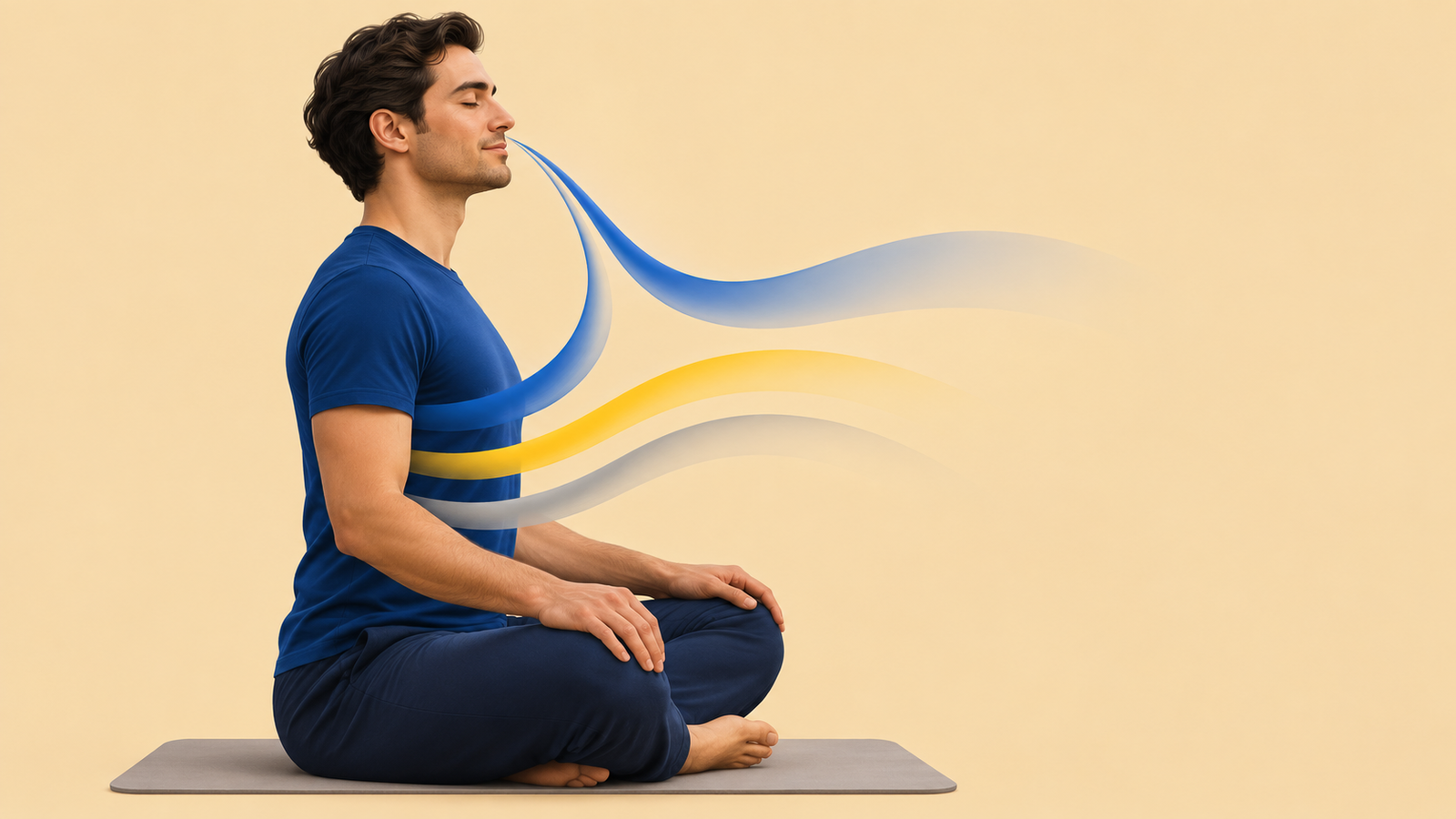
What is happening to carbon
dioxide?
At rest, breathing helps keep oxygen, carbon dioxide and blood
acidity within a narrow working range. When ventilation rises far above
current need, carbon dioxide can fall. This shift can contribute to
respiratory alkalosis and changes in blood-vessel tone.
The brain is particularly sensitive to carbon dioxide. Low carbon
dioxide can narrow cerebral blood vessels and reduce blood flow, helping
explain why a person may feel lightheaded during or after overbreathing.
Tingling and cramping can also occur as blood chemistry changes.
This does not mean every moment of dizziness is
harmless hyperventilation. It means overbreathing is one plausible,
common mechanism that should prompt you to reduce the dose rather than
intensify it.
A 2026 clinical narrative review makes another important point:
breathing practices are not interchangeable. Slow-paced breathing,
high-ventilation practices, breath holds and multimodal protocols engage
different mechanisms and should not be grouped together as though they
produce the same effects (PubMed).
“Slow” breathing
can still be too much breathing
Rate is only one part of the dose. The amount of air moved with each
breath matters too.
Imagine two people both breathing six times per minute. One uses a
quiet, comfortable breath with relaxed rib movement. The other
repeatedly fills the lungs to maximum capacity and pushes every exhale
to empty. Their breathing rates are identical, but their ventilation and
experience may be very different.
This is why good instruction usually includes words such as:
- gentle;
- quiet;
- comfortable;
- unforced;
- sustainable; and
- appropriate for the activity.
The American Heart Association advises beginners to limit structured
deep-breathing techniques to a small number of cycles and stop if
dizziness or lightheadedness occurs. It also recommends consulting a
healthcare professional when heart or lung conditions are present (American
Heart Association).
The goal is not to win the breath. The goal is to use it well.

What
should you do if you feel dizzy during breathwork?
1. Stop the technique
Return to ordinary breathing. Do not continue the prescribed count,
force the exhale or complete one last round.
2. Get physically safe
Sit down or lie on your side or back if needed. Move away from
stairs, water, traffic, equipment, hot environments and anything you
could fall against. If you are already seated, keep your feet supported
and avoid standing suddenly.
3. Let the breath
become smaller and easier
Avoid repeatedly gulping large “recovery breaths.” Allow the pace and
volume to settle naturally. A quiet, easy exhale through gently pursed
lips may feel useful for some people, but the aim is normal
breathing—not another demanding protocol.
4. Notice what else is
present
Ask whether there is chest pain, fainting, new weakness, confusion,
severe headache, an irregular or racing heartbeat that does not settle,
unusual shortness of breath, or symptoms that feel different from prior
experiences.
5. Do not immediately
repeat the exercise
Even if the feeling passes, treat it as feedback. The next practice
should be gentler, shorter or differently structured. If the reaction
was strong, unexpected or recurrent, seek appropriate professional
guidance before trying it again.
When is
dizziness a reason to seek medical help?
Breathwork content cannot safely diagnose the cause of dizziness.
Seek urgent medical help when symptoms include:
- fainting or near-fainting that does not resolve quickly;
- chest pain or pressure;
- severe or unusual shortness of breath;
- new confusion, weakness, numbness, difficulty speaking or severe
headache; - a fall or injury;
- symptoms during pregnancy that are concerning or new;
- rapid breathing with fever, bleeding or significant pain;
- a known cardiac, pulmonary, neurological or metabolic condition with
new symptoms; or - a first episode of unexplained rapid breathing or severe
lightheadedness.
If milder symptoms recur every time you practice, that also deserves
attention. Repeatedly provoking symptoms is not a substitute for
understanding them.
A safer starting
sequence for beginners
For most beginners seeking calm, focus or recovery, the starting
point does not need to be dramatic.
Step 1: Observe before you
change
Sit comfortably with back and feet supported. For 30 to 60 seconds,
notice:
- whether you are breathing through the nose or mouth;
- where you feel movement;
- whether the breath is quiet or noisy;
- whether the exhale finishes on its own or is being pushed; and
- whether you already feel short of breath, dizzy or tense.
Observation is a form of assessment. It prevents you from layering a
technique onto a pattern you have not noticed.
Step 2: Use a
comfortable, ordinary-sized breath
Let the inhale arrive gently. Allow the lower ribs and abdomen to
move without forcing the belly outward. Let the exhale release without
squeezing out the last air.
Nasal breathing can be a practical default at rest when the airway is
comfortable and open, but it should not be forced through significant
obstruction.
Step 3: Add a
light rhythm only if it stays easy
Try two to three minutes of evenly paced breathing with no holds. A
simple example is about four seconds in and five or six seconds out,
adjusted so there is no air hunger, strain or dizziness.
The numbers are a guide, not a test. Shorten them if necessary. If
counting makes you tense, stop counting.
Research on voluntary slow breathing shows that it can change heart
rate and heart-rate-variability measures during practice, but the
meaning of those changes depends on measurement conditions and should
not be translated into guaranteed long-term health outcomes (systematic review and
meta-analysis).
Step 4: End
with normal breathing and a check-in
After the practice, let go of the pattern. Notice whether you feel
clearer, calmer, more strained, sleepier, restless or unchanged.
This check-in is not about chasing the “correct” feeling. It is how
you learn whether the dose matched the purpose.
Breath
training and breathwork are not the same thing
At Origins Unity, I separate breath training from
breathwork, even though they overlap.
Breath training develops skills that carry into
daily life: awareness, comfortable mechanics, appropriate nasal
breathing, coordination with movement, recovery breathing and the
ability to adapt under different demands.
Breathwork uses an intentional breathing practice to
influence a short-term state or create a structured experience. It may
be gentle and restorative, focused and balancing, or more
activating.
Someone who becomes dizzy from large, structured breaths may not need
a more advanced breathwork pattern. They may need to return to breath
training: smaller breaths, less effort, better mechanics and a clearer
understanding of what they are trying to accomplish.
This is one reason an Origins
Unity breathing assessment looks at the person before prescribing a
technique. No single breath-hold score, wearable number or sensation
should be treated as a diagnosis. The useful question is how multiple
observations fit together and whether something warrants referral.
What does the evidence
actually support?
There is promising evidence for selected breathing practices, but
“breathwork” is too broad a word to support one universal claim.
A 2026 systematic review of randomized trials on diaphragmatic
breathing found potential benefits across several outcomes, while also
emphasizing heterogeneous methods, limited standardization and
inadequate safety reporting. No serious adverse events were reported in
the included literature, but safety was explicitly reported in only a
minority of studies (PubMed). Absence of
reported harm is not the same as proof that every method is safe for
every person.
Evidence also depends on the outcome. Slow-paced breathing can
produce immediate changes in heart rate, blood pressure and HRV-related
measures in some studies. That does not prove that a two-minute exercise
treats chronic anxiety, fixes burnout or replaces medical care. The
National Center for Complementary and Integrative Health describes
relaxation practices as generally safe but notes that evidence for
specific health conditions is limited and that these methods should not
replace conventional care (NCCIH).
For dysfunctional breathing and hyperventilation syndrome
specifically, a Cochrane review found too little credible trial evidence
to determine whether breathing exercises provide added value or which
technique is superior (Cochrane).
That is a useful reminder to avoid turning a reasonable coaching
practice into a medical certainty.
Four ways to
reduce the chance of getting dizzy
Start below your maximum
Use an intensity you could maintain without strain. There is no prize
for the longest exhale, deepest inhale or strongest sensation.
Change one variable at a
time
Do not simultaneously add faster breathing, breath holds, cold
exposure and standing movement. If symptoms occur, you will not know
which variable mattered.
Practice seated or lying
down at first
A stable position reduces the consequence of losing balance. It also
makes it easier to observe the breath without performance pressure.
Match the method to the
purpose
For a work break, a few minutes of quiet, comfortable breathing may
be more appropriate than a high-intensity session. For sleep, use a
method that settles rather than stimulates. For athletic work, breathing
should match the actual metabolic demand of the activity.
You can explore this broader distinction in How
Breathwork Can Help With Stress, Focus and Workplace Performance and
the Origins Unity guide to nervous-system
regulation.
The Breath
Code principle: minimum effective dose
The Breath Code approach begins with a simple principle: use the
least intensity needed to create the desired effect.
That might mean:
- 60 seconds of awareness before a meeting;
- three minutes of comfortable, slightly slower breathing after
work; - practice coordinating the breath with walking or strength
training; - a longer guided restorative session when there is time and
appropriate support; or - supervised activating work only when the person, setting and purpose
justify it.
Consistency matters more than spectacle. The useful practice is the
one you can understand, tolerate, repeat and apply in real life.
If dizziness appears, the practice has given you valuable
information. Listen to it. Reduce the dose. Reassess the goal. And when
the response is strong, unusual or medically concerning, move out of
coaching and into appropriate clinical care.

Frequently asked questions
Is it normal to
feel dizzy during breathwork?
It can occur, especially with rapid, forceful or overly large
breathing, but it should not be treated as a required or desirable
effect. Stop the technique, settle in a safe position and return to
normal breathing. Seek medical help when symptoms are severe, new,
persistent or accompanied by warning signs.
Does dizziness
mean I am getting more oxygen?
Not necessarily. During hyperventilation, blood oxygen may already be
adequate while carbon dioxide falls. Low carbon dioxide can reduce
cerebral blood flow and contribute to lightheadedness. The sensation is
not proof of superior oxygen delivery.
Can slow breathing make me
dizzy?
Yes. A slow rhythm can still move too much air if every breath is
very large or forced. Reduce the depth, effort or duration and remove
breath holds. The breath should remain comfortable.
Should I breathe into a paper
bag?
No routine self-treatment recommendation can be made safely because
similar symptoms can have different causes, including medical
emergencies. Guidance cited by the World Health Organization notes risks
of paper-bag rebreathing in some populations and emphasizes ruling out
physical causes and coaching normal—not deeper or faster—breathing (WHO guidance via
NCBI Bookshelf).
Are breath holds safe?
Breath holds are not appropriate for everyone. They should never be
practiced in or near water, while driving, standing near a fall hazard
or in any situation where loss of consciousness could cause injury.
People with health conditions, pregnancy or concerning symptoms should
consult an appropriate healthcare professional before intensive
breath-retention work.
What is
the safest breathing exercise for a beginner?
There is no single best exercise for everyone, but a low-intensity
starting point is seated, quiet, ordinary-sized breathing with no holds
for two to three minutes. Stop if it creates dizziness, distress or air
hunger. The Origins
Unity breathwork classes and assessment page explains how
foundational breath training differs from more activating practices.
A restrained next step
If you want to understand your current breathing habits before
collecting more techniques, explore the Origins
Unity breathing assessment or review the available breathwork
classes in Seattle and online. The purpose is not to diagnose a
medical condition. It is to choose a more appropriate starting point,
recognize when referral is needed and build a practice that supports
daily life rather than competing with it.
About David Reveles
David Reveles is the founder of Origins Unity LLC and an Oxygen
Advantage® Instructor. He teaches breath training and breathwork as part
of an integrated approach to mindfulness, movement, recovery and
practical wellness for individuals, groups and organizations.
Medical and safety note
This article is educational and is not medical advice, diagnosis or
treatment. Breathing practices can produce strong physical and emotional
effects and are not appropriate for everyone. Consult a qualified
healthcare professional when you have cardiovascular, pulmonary,
neurological, psychiatric, metabolic or other significant health
conditions; are pregnant; have a history of fainting or seizures; or are
unsure whether a technique is appropriate. Never practice breath
retention or intensive breathwork in or near water, while driving or
where loss of awareness could cause harm.