
A practical way to keep complete meals available when meetings,
deadlines, travel, or low energy disrupt your usual plan.
By David Reveles, Founder of Origins Unity
Quick answer: Healthy eating during a busy week is
easier when you stop relying on one perfect meal-prep day. Keep two or
three backup meals that can be assembled from a protein food, vegetables
or fruit, a carbohydrate food, and enough flavor or fat to make the meal
satisfying. Use a mix of ready-to-eat, frozen, canned, and quick-cooking
foods. The goal is not a flawless menu. It is a reliable next meal.
Most nutrition plans are written for the week you hope to have.
You shop on Sunday. You prepare several recipes. Lunch happens at the
right time. Dinner is made before you are exhausted.
Then the real week arrives.
A meeting runs through lunch. A project changes direction. The
commute takes longer than expected. The fresh ingredients are still in
the refrigerator, but the energy required to turn them into dinner is
gone.
That is not a reason to abandon the plan. It is a reason to build a
second plan.
At Origins Unity, I think of this as a backup meal
system: a small set of foods and meal combinations that remain
useful when time, attention, and motivation are limited.

A useful food plan includes options for the days when the
original plan does not happen.
Why a
backup meal system works better than a perfect menu
A weekly menu answers, “What would I like to eat?”
A backup system answers a different question: “What can I
still assemble when the day has gone sideways?”
That distinction matters for busy professionals. The problem is often
not a lack of nutrition knowledge. It is the number of decisions between
finishing work and eating a complete meal.
Meal planning has been associated with better diet quality and
greater food variety in a large observational study of more than 40,000
adults. The study cannot show that meal planning caused those outcomes,
but it supports a practical point: planning ahead may make nutritious
choices easier to carry out. (Ducrot et al.,
2017)
The plan does not have to be elaborate. The current U.S. dietary
guidance emphasizes nutrient-dense foods, including protein foods,
vegetables, fruits, healthy fats, and whole grains. It also recognizes
frozen and canned vegetables and fruits as useful options when chosen
with limited added sugars and appropriate sodium. (Dietary
Guidelines for Americans, 2025–2030)
Convenience is not the opposite of healthy eating. It can be the
bridge that helps a useful meal happen.
Start with one simple meal
formula
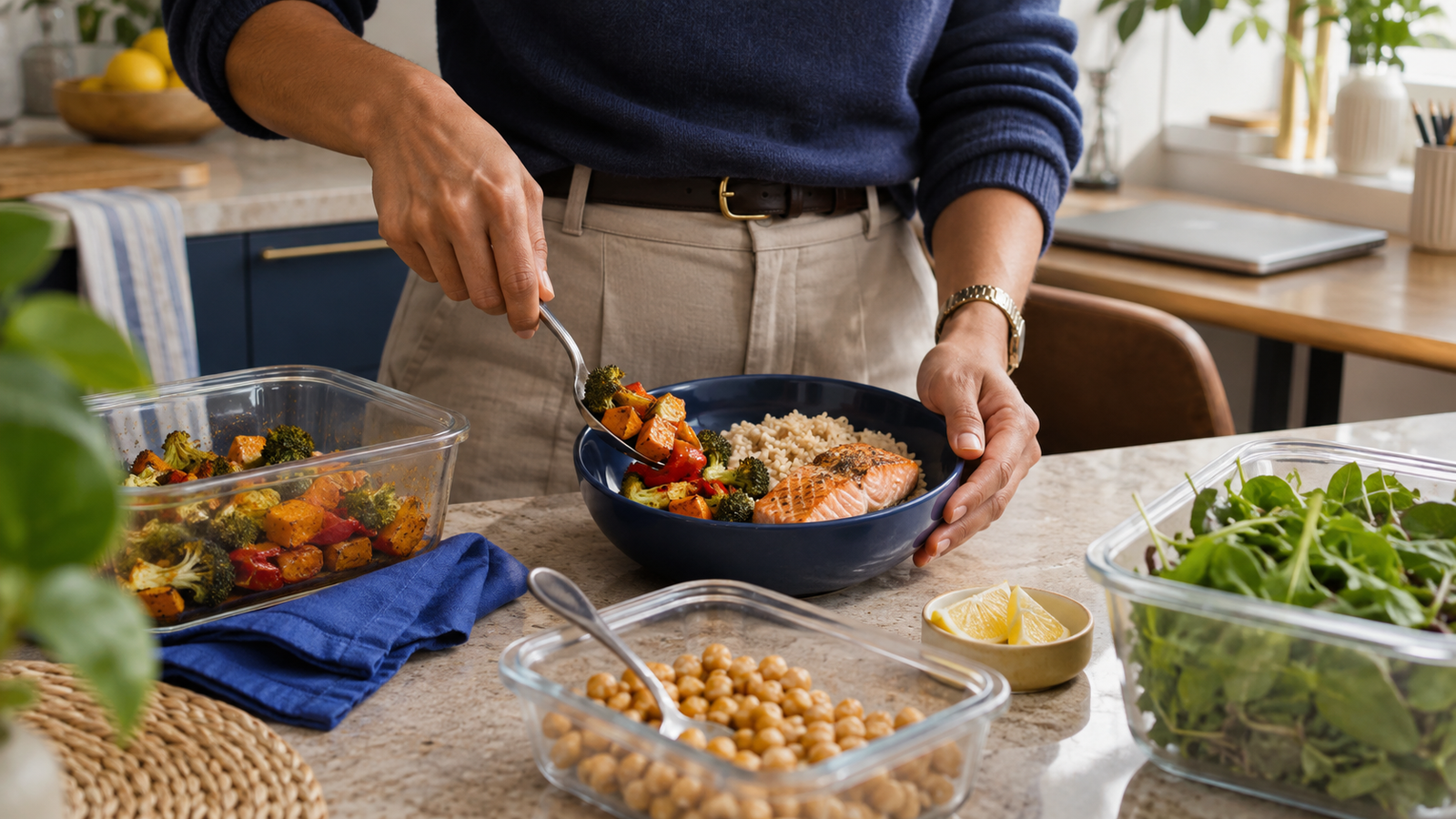
You do not need a new recipe for every backup meal. Use four
parts:
- A clear protein food — fish, eggs, tofu, tempeh,
beans, lentils, edamame, yogurt, fortified soy yogurt, chicken, or
another food that fits your preferences. - Vegetables or fruit — fresh, frozen, canned, or
prewashed all count. - A carbohydrate food — rice, potatoes, oats, bread,
tortillas, pasta, quinoa, beans, lentils, or fruit. - Flavor and fat as needed — olive oil, avocado,
nuts, seeds, pesto, salsa, tahini, or a sauce you enjoy.
This is a flexible version of the meal structure in the Origins Unity
Clock
Method. The Clock Method helps you see balance on a plate. The
backup system helps you keep the parts available.
There is no requirement that every meal look identical. Beans and
lentils provide both protein and carbohydrate. Salmon and eggs already
contain fat. A mixed soup, sandwich, or grain bowl does not need to be
separated into perfect sections.
Your needs may also change with body size, training, age, appetite,
medical conditions, and goals. A visual formula is a starting point, not
an individualized prescription.
Build three levels of backup
Your system should work at more than one level of effort.
Level 1: quick cooking,
about 15 minutes
Use this when you have a little time and enough energy to cook one
component.
- Eggs or tofu scrambled with frozen vegetables, plus toast or
potatoes. - Fish or tofu cooked in a skillet, plus microwave rice and frozen
broccoli. - Whole-grain or legume pasta with jarred tomato sauce, spinach, and
canned salmon, tuna, beans, or lentils. - A quick vegetable stir-fry with edamame and rice.
Level 2: assemble and
heat, about 5 minutes
Use this between meetings or after a long workday.
- A grain bowl with microwave rice, canned salmon or chickpeas,
prewashed greens, and dressing. - Lentil or bean soup with frozen vegetables added, plus whole-grain
toast. - A wrap with tuna, salmon, tofu, eggs, or beans, plus greens and
fruit. - Plain Greek yogurt or a protein-rich soy yogurt with oats, berries,
and nuts or seeds.
Level 3: no-cook or ordered
fallback
Use this when cooking is not realistic.
- A prepared salad with a clear protein food, plus bread, rice,
potatoes, or fruit if you need a more complete meal. - Hummus, eggs or edamame, vegetables, whole-grain crackers, and
fruit. - Takeout built around a protein food and vegetables, with rice,
noodles, potatoes, bread, or another carbohydrate food adjusted to your
appetite. - A frozen meal improved with an extra serving of vegetables or a
simple side.
The Centers for Disease Control and Prevention recommends
prioritizing a variety of protein foods and recognizes frozen, dried,
and canned produce as practical choices. (CDC:
Healthier Meals and Snacks)
The 10-item backup grocery
list
You do not need to buy every item below. Choose one or two from each
group that you genuinely eat.
| Role in the meal | Practical options |
|---|---|
| Ready protein | Canned salmon or tuna, beans, lentils, eggs, baked tofu, plain yogurt, fortified soy yogurt |
| Freezer protein | Fish fillets, edamame, tofu, cooked beans, individually frozen chicken if appropriate |
| Vegetables | Frozen broccoli or mixed vegetables, prewashed greens, no-salt-added canned vegetables |
| Fruit | Apples, oranges, berries, frozen fruit, fruit packed without added sugar |
| Carbohydrate | Microwave rice, oats, potatoes, whole-grain bread, tortillas, pasta, quinoa |
| Flavor | Salsa, lemon, olive oil, tahini, pesto, herbs, lower-sodium sauce |
A simple starting list might be:
- eggs;
- tofu or canned fish;
- canned beans;
- frozen mixed vegetables;
- prewashed greens;
- microwave rice;
- oats;
- berries or another fruit;
- olive oil or tahini;
- salsa, lemon, or another sauce you already enjoy.
These ingredients can make several different meals without requiring
several different recipes.
Seven backup meals
for a demanding workweek
Use these as templates, not rules.
| Backup meal | Protein anchor | Produce | Carbohydrate | Finish |
|---|---|---|---|---|
| Salmon rice bowl | Canned salmon | Frozen vegetables or greens | Microwave rice | Lemon and olive oil |
| Tofu-edamame bowl | Tofu and edamame | Frozen stir-fry vegetables | Rice or quinoa | Lower-sodium soy sauce or sesame dressing |
| Egg-and-vegetable scramble | Eggs | Spinach, peppers, or frozen vegetables | Toast or potatoes | Salsa or avocado |
| Lentil soup upgrade | Lentils in soup | Extra frozen vegetables | Bread or crackers | Olive oil, herbs, or yogurt if desired |
| Chickpea wrap | Chickpeas, hummus, and optional egg or tofu | Greens, tomato, cucumber | Whole-grain or gluten-free wrap | Tahini or lemon |
| Fast pasta bowl | Lentil pasta, beans, fish, tofu, or chicken | Spinach and tomato sauce | Pasta | Olive oil or pesto |
| Yogurt-oat bowl | Greek yogurt or protein-rich soy yogurt | Berries or banana | Oats | Nuts or seeds |
If the meal feels too small, add more food. If it feels too large,
save part. Hunger, satisfaction, training, and how you feel between
meals offer useful feedback.

Build from components: a protein food, produce, a carbohydrate
food, and flavor you enjoy.
You do not need
to hit a perfect protein number
Protein is useful because it provides essential amino acids and helps
support muscle tissue. It is also an easy place to notice whether a meal
is complete.
That does not mean everyone needs the same target or that more is
always better.
Instead of starting with a large daily number from social media, ask
a simpler question: Does this meal contain a recognizable
protein food?
For an active person, someone trying to preserve or build muscle, or
an older adult, total protein needs may deserve more individual
attention. A registered dietitian or qualified clinician can help when
kidney disease, pregnancy, a gastrointestinal condition, an eating
disorder history, medication use, or another medical issue changes the
decision.
Genetic testing is not required to build these meals. Genetics may
raise questions worth discussing in a broader coaching or clinical
context, but it cannot determine your perfect grocery list or explain an
afternoon energy change by itself.
Use
packaged foods without making the label another full-time job
Packaged foods can save time. You do not need to classify them as
automatically good or bad.
When comparing similar products, check:
- the serving size and number of servings;
- protein and fiber when those are relevant to the food;
- sodium, especially for soups, sauces, canned foods, and frozen
meals; - added sugars when comparing yogurt, cereal, drinks, or sauces.
The U.S. Food and Drug Administration recommends using the Nutrition
Facts label to compare similar foods and reminds consumers that serving
size describes the amount people typically eat; it is not a
recommendation for how much you personally should eat. (FDA:
How to Understand and Use the Nutrition Facts Label)
Choose the option that fits your overall routine, preferences,
budget, and medical needs. A convenient food you actually use may be
more helpful than an ideal ingredient that repeatedly goes to waste.
Make the system visible
The backup meal cannot help if you forget it exists.
Try a small “backup zone” in your pantry or freezer. Keep the core
ingredients together. Put two meal combinations on a note inside a
cabinet, on the refrigerator, or in your phone.
For example:
Meal A: rice + frozen vegetables + salmon or tofu +
lemon
Meal B: soup + beans + spinach + toast
That note removes the need to invent dinner while tired.
For a broader routine that connects food, movement, sleep, and
stress, see fitness
and nutrition plans for busy professionals. If low energy is the
main issue, start with How
to Get Your Energy Back When You Work a Desk Job.
Protect food safety
when you prepare ahead
If you batch-cook meals, cool and store them safely.
The U.S. Department of Agriculture advises refrigerating leftovers
promptly, using shallow containers, and eating refrigerated leftovers
within three to four days or freezing them for longer storage. Reheat
leftovers to 165°F. (USDA:
Handling Leftovers Safely)
Labeling containers with the preparation date can make the decision
easier. When you will not eat a portion within the recommended
refrigerator window, freeze it early rather than waiting until the last
day.
A 15-minute setup for this
week
You do not need to prepare seven identical containers.
Try this:
- Look at the next five workdays and identify the two most demanding
days. - Choose one quick-cooking meal and one assemble-and-heat meal.
- Check what you already have in the pantry and freezer.
- Buy only the missing components.
- Put the backup meal where you will see it.
- Decide in advance when to use it: for example, “If lunch has not
started by 1:30, I use the backup.”
This is not a rigid eating schedule. It is a decision rule that
protects the meal when the calendar becomes unpredictable.
When a backup meal is not
enough
A food system can reduce friction. It cannot diagnose persistent
fatigue, post-meal symptoms, dizziness, unintended weight change, or
ongoing gastrointestinal problems.
If symptoms are frequent, severe, unexplained, or interfering with
daily life, speak with a qualified healthcare professional. If you use
insulin, a GLP-1 medication, or another medicine that affects appetite
or blood glucose, coordinate significant dietary changes with the
prescribing clinician or a registered dietitian. Origins Unity’s GLP-1
nutrition and fitness guide explains why muscle support, adequate
nourishment, and clinical guidance matter.
Coaching can help with the routine around food. Medical assessment
and medical nutrition therapy belong with appropriately qualified
professionals.
Build for the week you
actually have
A useful meal plan should not collapse the first time work runs
late.
Keep the Clock Method for the shape of the meal. Add a backup system
for the reality of the week.
Start with two meals, not twenty. Make the ingredients visible.
Repeat what works. Change what does not.

The goal is not a perfect menu. It is a reliable next meal and
enough room to end the workday.
Want
a nutrition routine that fits your work and training?
Fatigue
to Fit brings practical nutrition habits together with personalized
training, recovery, stress management, and accountability.
The aim is not to give you more rules. It is to build a system you
can use on ordinary weeks and demanding ones.
Explore the program and speak with David if you want help turning the
basics into a routine that fits your life.
General nutrition education only. This article is not medical
advice or individualized medical nutrition therapy.

Frequently asked questions
What is a backup meal?
A backup meal is a simple meal you can assemble, heat, or order when
your planned meal is not realistic. It still includes a protein food,
produce, a carbohydrate food, and enough flavor or fat to be
satisfying.
Are frozen and canned foods
healthy?
They can be useful parts of a balanced eating pattern. Frozen
produce, canned beans, canned fish, and packaged grains can reduce
preparation time. Compare labels when sodium, added sugar, or portion
size matters for your needs.
Do I have to meal prep on
Sunday?
No. You can prepare components on any day, cook extra portions when
you are already cooking, or rely on freezer and pantry foods. The system
should fit your schedule.
How many backup meals
should I keep?
Two or three reliable combinations are enough to start. Choose foods
you enjoy, can afford, and are likely to keep available.
Does every meal
need the same amount of protein?
No. Protein needs vary. A recognizable protein food at each main meal
is a practical starting cue, not a universal prescription.
Can this approach support
weight loss?
It may make meals more consistent, but it does not guarantee weight
loss. Total intake, portions, beverages, snacks, activity, sleep,
medications, and health conditions can all matter. For a broader
approach, read Sustainable
Fat Loss: How Holistic Fitness Helps You Lose Weight and Keep It
Off.
What if I feel
exhausted or unwell after eating?
Do not assume that one food or a lack of discipline explains the
problem. Note the pattern and discuss persistent, severe, or unexplained
symptoms with a qualified healthcare professional.
About the author
David Reveles is the founder of Origins Unity LLC, a Seattle-based
holistic fitness and wellness company. His coaching connects practical
movement, nutrition habits, stress management, and recovery with the
demands of work and daily life.