
Short answer: Recovery is not the absence of effort. It is the set of conditions that let your body and mind rebuild after load, and load comes in more forms than training. At Origins Unity we look at recovery across eight domains of whole-person wellness: physical, emotional, social, spiritual, environmental, occupational, financial and intellectual. Most people who feel permanently tired are not under-training. They are under-recovering in two or three domains at once, and only paying attention to one.
Ask most people what recovery means and you’ll get some version of the same answer. A rest day. A foam roller. Maybe a massage if it’s been a rough week.
That’s a fraction of it. And it’s why so many people do everything right on paper and still wake up tired.
Recovery isn’t what happens when you stop. It’s what happens when the conditions are right for you to rebuild. Those conditions are specific, they’re learnable, and most of them have nothing to do with the gym.
What is recovery, actually?
Recovery is your body and mind returning to baseline after a demand, and ideally adapting so the next demand costs you less.
The key word is demand. A hard training session is a demand. So is a week of back-to-back meetings. So is grief, a newborn, a commute, a conflict you haven’t resolved, a job that asks you to be someone you’re not. Your nervous system doesn’t file these in separate folders. It adds them up.
That’s the piece people miss. You can’t out-sleep a stress load you never address, and you can’t out-train a recovery deficit. If you’ve ever cleaned up your diet, added workouts, and still felt worse, this is usually why.
Why a rest day is not the same as recovery
A rest day is the absence of training. Recovery is active, and it’s broader.
You can take a full rest day and recover almost nothing. Sleep five hours, scroll until midnight, skip meals, carry an unresolved work problem around all afternoon. You rested. You didn’t recover.
You can also train hard on a Tuesday and recover beautifully, because you slept well, ate enough, downshifted your nervous system in the evening, and spent an hour with people who make you feel like yourself.
Rest is one input. Recovery is the whole system.

What are the pillars of recovery?
We organize them around the eight domains of whole-person wellness. Four of them you can act on tonight. The other four shape whether the first four stick.
1. Physical: sleep, movement, and fuel
Sleep is the foundation, and it’s not negotiable. The CDC recommends at least seven hours a night for adults, and notes that more than one in three American adults don’t get it. No supplement, no protocol, no cold plunge closes that gap.
Movement is recovery too, which surprises people. Gentle aerobic work, walking, and mobility all support circulation and sleep quality. The federal Physical Activity Guidelines for Americans put adults at 150 to 300 minutes of moderate activity per week plus strength work on two days. Notice that’s a floor for health, not a training program. Most tired professionals I work with aren’t exceeding it. They’re nowhere near it, and they’ve convinced themselves they’re overtrained.
Fuel is the third leg. Chronic under-eating, especially under-eating protein, keeps your body in a repair deficit no matter how early you go to bed.
2. Emotional: regulating your nervous system
If you only add one practice, make it this one.
Your breath is the most direct lever you have on your autonomic nervous system. A 2022 systematic review and meta-analysis found that voluntary slow breathing increases vagally-mediated heart rate variability, during the session, right after a single session, and after a multi-session intervention. In plain terms: slow breathing shifts you toward the parasympathetic state where recovery happens, and the effect builds with practice.
This is why breathwork sits at the center of how we teach recovery, and why our community breathwork events are usually where people feel the difference first. It costs nothing, it works in ten minutes, and you can do it in a parked car between meetings.
3. Social: connection is a physiological input
Loneliness isn’t only unpleasant. It carries measurable health risk.
The U.S. Surgeon General’s advisory on social connection reports that poor social relationships are associated with a 29 percent increased risk of heart disease and a 32 percent increased risk of stroke, and that loneliness and social isolation raise the risk of premature death by 26 and 29 percent respectively.
Recovery has a social dimension, and it is not optional. This is a large part of why we run programming in groups rather than only one to one.
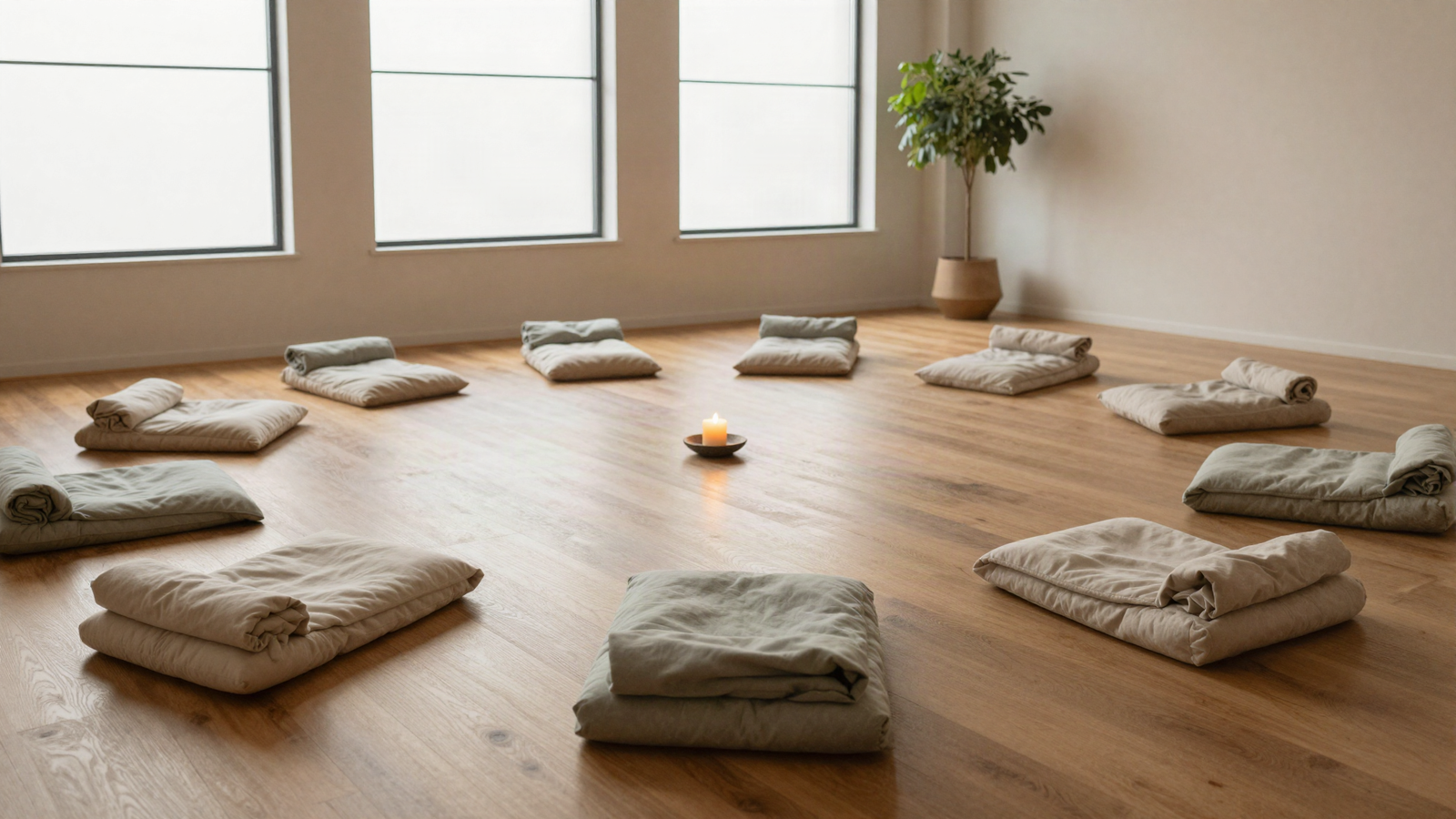
4. Environmental: the room you recover in
Light, temperature, noise, clutter, and screens all shape how well your body downshifts. A dark, cool, quiet bedroom isn’t a luxury. It’s the lowest-effort recovery upgrade available to most people, and it’s usually one evening of work to set up.
5. Occupational: can you actually put work down?
Psychological detachment from work is its own recovery skill. If you’re still mentally in the meeting at 9 p.m., your body is still in the meeting too.
This one rarely improves through willpower. It improves through boundaries, transitions, and sometimes through a culture change that one person can’t make alone. That’s exactly the gap our corporate wellness program is built to address, because individual resilience training inside a system that never lets anyone detach is a losing proposition.
6. Intellectual: recovering your attention
Attention is a finite resource and most of us spend it like it isn’t. Constant input, no white space, no boredom. Reading something slow, learning a skill with your hands, or simply walking without a podcast all restore something that scrolling does not.
7. Spiritual and values: recovery needs a why
People sustain recovery habits when those habits connect to something they care about. Not abstract wellness. A specific life they’re trying to be present for.
This is the domain most programs skip, and it’s the one that determines whether anything survives past week three.
8. Financial: the stressor nobody puts on the list
Money stress is a chronic physiological load. It disrupts sleep, drives up baseline tension, and quietly undermines every other pillar. We’re not financial advisors, and we don’t pretend to be. But naming this as a real recovery variable, instead of treating it as separate from health, is more honest than leaving it off the chart.
Where should you start?
Not with all eight. That’s how people end up doing nothing.
Start by finding the two that are most broken. For most tired professionals it’s sleep and nervous system regulation, in that order. Fix the sleep window first, because it makes every other pillar easier. Then add a short daily downshift practice, five to ten minutes of slow breathing, ideally at the same time each day.
Give it three weeks before you judge it. Recovery compounds, and the first week usually feels like nothing is happening.
If you want structure rather than a list of good intentions, that’s the design behind our Fatigue to Fit program: 90 days rebuilding the physical and emotional pillars in sequence, for people who are capable and competent and exhausted. For teams, we build the same architecture at an organizational level through our corporate programs. And if you’d rather just come feel what a regulated nervous system is like before committing to anything, come to a community breathwork event.
Frequently asked questions
What is the difference between rest and recovery?
Rest is the absence of activity. Recovery is the active process of rebuilding after a demand, and it depends on conditions like sleep quality, nervous system state, nutrition, and connection. You can rest all weekend and recover very little if those conditions aren’t met.
How long does it take to recover from chronic fatigue or burnout?
Most people notice a meaningful shift in three to six weeks once sleep and nervous system regulation are addressed consistently, and a fuller rebuild takes closer to 90 days. The timeline depends on how long the deficit has been building and how many domains are affected. Persistent fatigue can also have medical causes, so see a physician if it doesn’t respond.
Is recovery only relevant for athletes?
No. Athletes made the language popular, but the physiology applies to anyone carrying load, and most people carry far more cognitive, emotional, and occupational load than physical. A desk worker with poor sleep and a chronically activated nervous system has a real recovery problem even if they never train.
Which recovery pillar matters most?
Sleep, because no other pillar compensates for its absence. Nervous system regulation is second, because it directly improves sleep quality and is the fastest lever to pull. If you only ever change two things, change those.
Can breathwork really improve recovery?
The research on slow breathing is encouraging. A 2022 meta-analysis found voluntary slow breathing increased vagally-mediated heart rate variability both during and after practice, which indicates a shift toward parasympathetic activity. It isn’t a cure for anything, and it works best alongside adequate sleep and nutrition rather than instead of them.
About David Reveles
I’m David Reveles, founder of Origins Unity, a holistic fitness and wellness company in Seattle, and a Fitness and Lifestyle Director working across luxury residential and corporate environments. I bring 25-plus years in fitness, martial arts, movement, and coaching, and I hold NASM-CPT, Oxygen Advantage, and credentials in breathwork, trauma-informed mindfulness, yoga, qi gong, nutrition, meditation, and workplace wellness, alongside CAPM, Lean Six Sigma Black Belt, and ITIL. Explore the Fatigue to Fit program, our group programs and individual programs, or get in touch.
This article is for general education and isn’t medical advice. If you’re dealing with persistent fatigue, sleep problems, or significant stress, please talk with a qualified healthcare provider.