You’re Probably Wasting Half of Every Workout (Without Even Knowing It)
Eccentric training is probably the most overlooked part of every workout — and it might be the exact thing standing between you and more muscle, fewer injuries, and feeling strong for years to come. It’s the slow, controlled lowering phase of a movement, and most people rush right through it without even noticing.
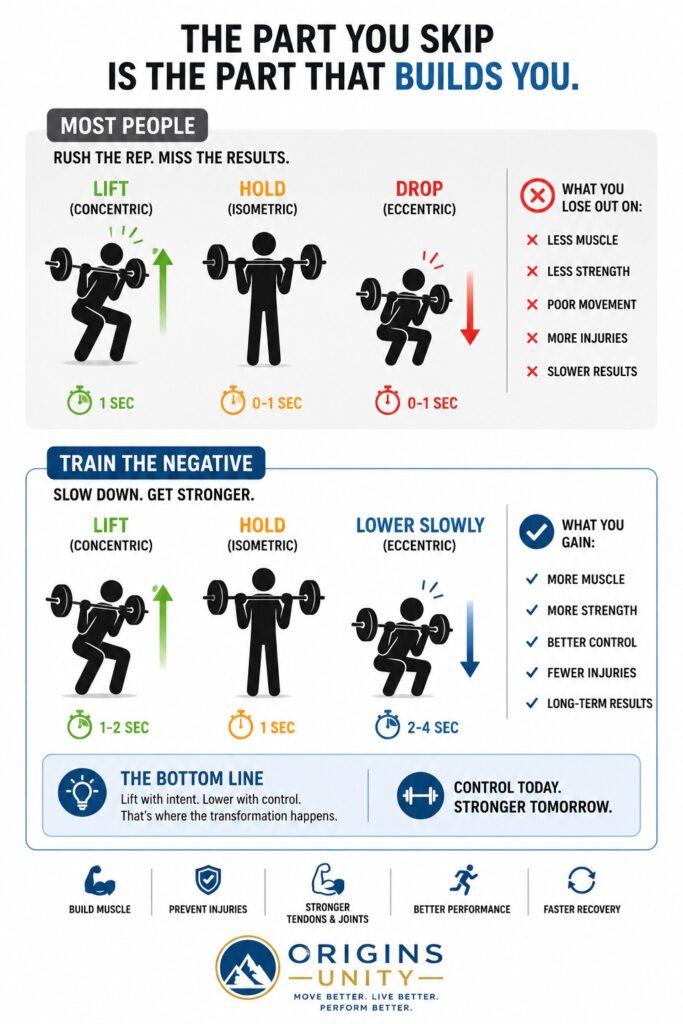
When people exercise, they tend to focus on one thing: lifting the weight. Grind through the hard part, finish the rep, move to the next one. That’s the whole mental model for most lifters.
But what if the part you’re rushing through is actually the part that matters most?
Meet the “Negative”: The Core of Eccentric Training
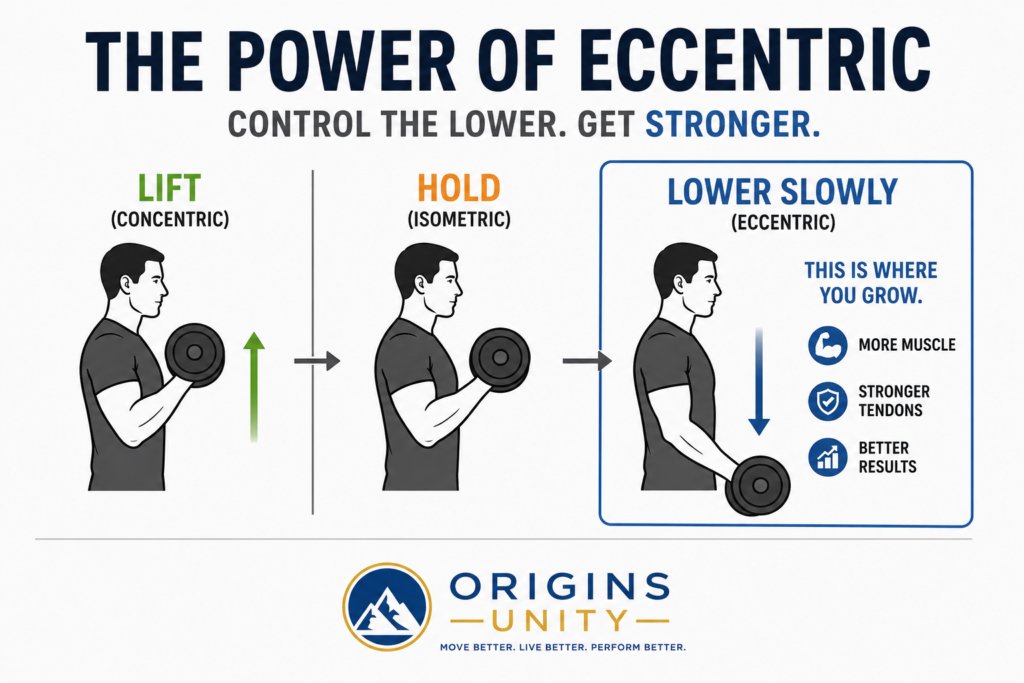
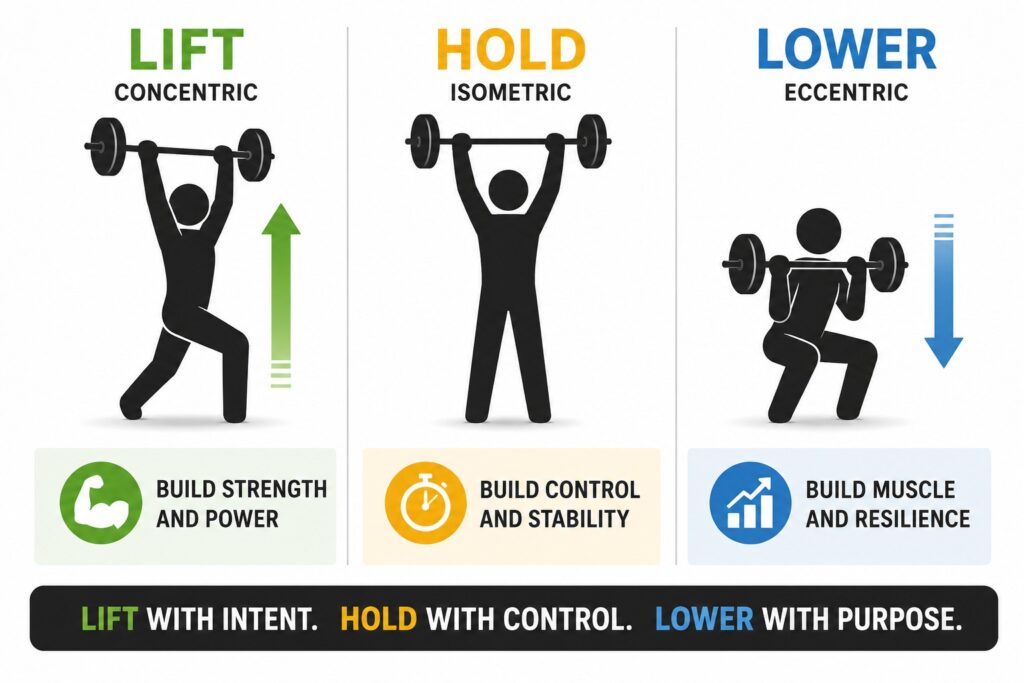
Every rep has three phases. There’s the concentric phase, when your muscle shortens to move the weight. The isometric phase, which is just the brief pause or hold. And then the eccentric phase — the lowering part, sometimes called “the negative” — where your muscle stays engaged while it lengthens and controls the weight back down.
Picture a squat. Standing up is concentric. Holding briefly at the top is isometric. And lowering back down slowly? That’s eccentric — the whole foundation of eccentric training.
Most people nail the first part and let gravity handle the rest.
Why Slowing Down Can Speed Up Your Results
There’s a decent body of research showing that eccentric training gives your body one of the strongest signals to adapt and grow. Slow the lowering phase down, and you’re building lean muscle, getting stronger, improving tendon health, protecting your joints, and even sharpening your balance — all without adding a single extra rep.
What you’re really building, though, isn’t just strength. It’s control. And that control shows up everywhere — climbing stairs, carrying groceries, hiking with friends, chasing your kids around the yard, staying capable as you get older. More Isn’t Always Better
There’s a persistent myth in fitness that progress only comes from lifting heavier, training longer, or just doing more. Honestly, that’s backwards. How you perform each rep usually matters more than how many reps you do.
That’s the whole appeal of eccentric training — it doesn’t ask you to lift more. It just asks you to control the weight better on the way down. Stretch the lowering phase to 2-4 seconds and the exercise gets noticeably harder, without touching the weight on the bar. It’s one of the easiest upgrades you can make to a workout you’re already doing.
Strength Is About Capacity, Not Punishment
At Origins Unity, we think fitness should support your life, not eat into it. Most of the people we work with are already stretched thin — demanding jobs, long days, family responsibilities, bad sleep, constant low-grade stress. The last thing they need is another punishing workout.
What actually helps is building a body with the capacity to handle real life. That means training smarter, recovering properly, eating enough to support your goals, paying attention to your breathing, managing stress, and building habits that don’t fall apart the second things get busy.
Fitness isn’t about surviving the next six weeks. It’s about staying strong for the next sixty years.
Small Changes Create Big Results
Next time you’re training, try this:
Lift with intention. Pause briefly at the top. Lower the weight slowly over 2-4 seconds. Repeat with control.
It’s a simple change. That’s kind of the point — sometimes the small adjustments move the needle more than anything else.
The Bigger Picture
This is exactly the approach we build into our Fatigue to Fit coaching programs — eccentric training and tempo work included. Instead of chasing quick fixes, we help busy professionals build systems that actually hold up: better energy, real strength, improved body composition, better mobility, faster recovery, long-term health that doesn’t fall apart after week six.
You’ll learn how to train with intention, fuel your body properly, breathe better, recover faster, and build routines that fit around your actual life — not the other way around.
Lasting change isn’t about doing more. It’s about doing the right things, consistently, for long enough that they stick.
If you’re tired, frustrated, or stuck despite putting in the effort, we’d love to help. Book a consultation and let’s talk about how Fatigue to Fit can get you stronger — without burning you out in the process.